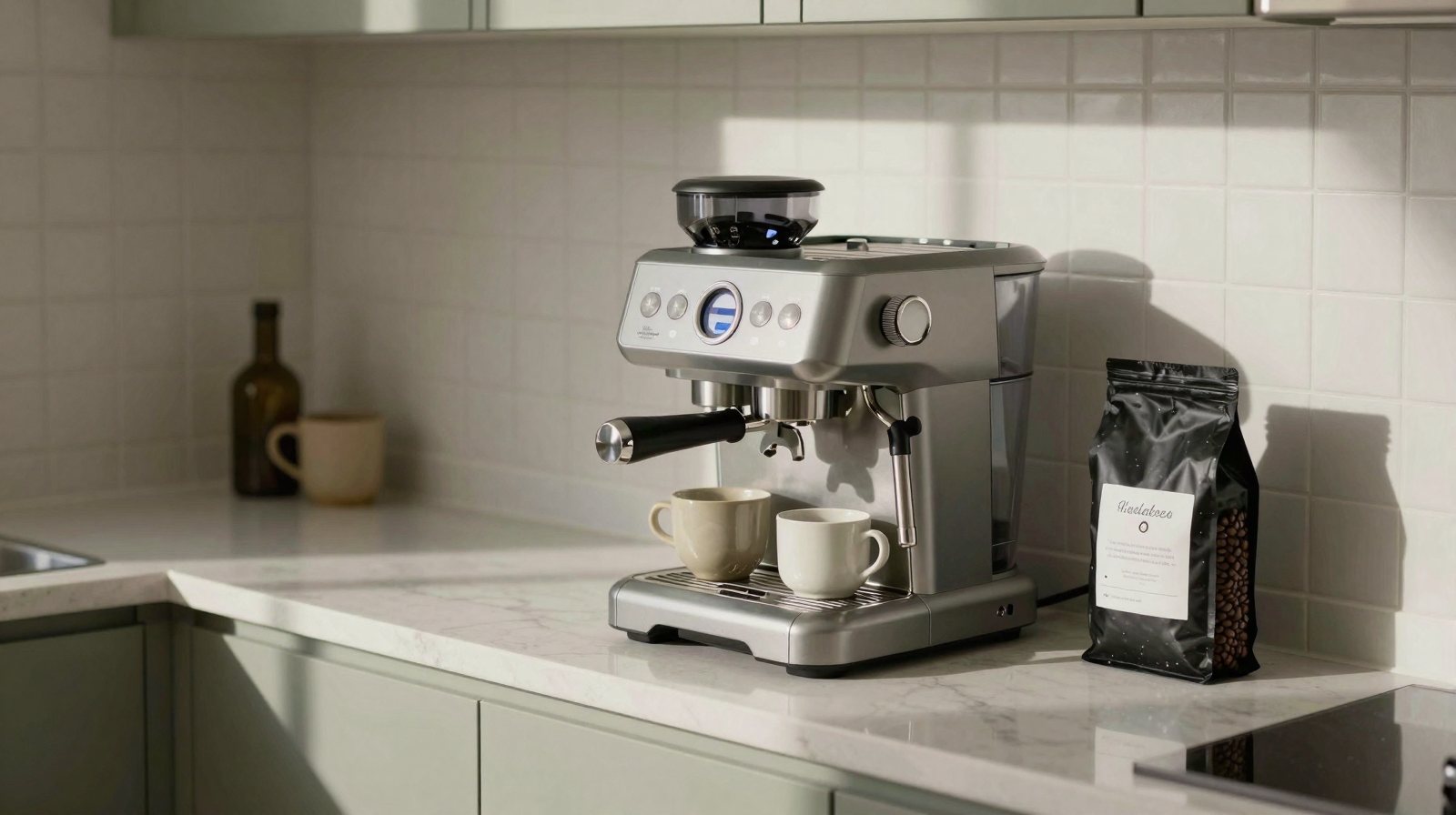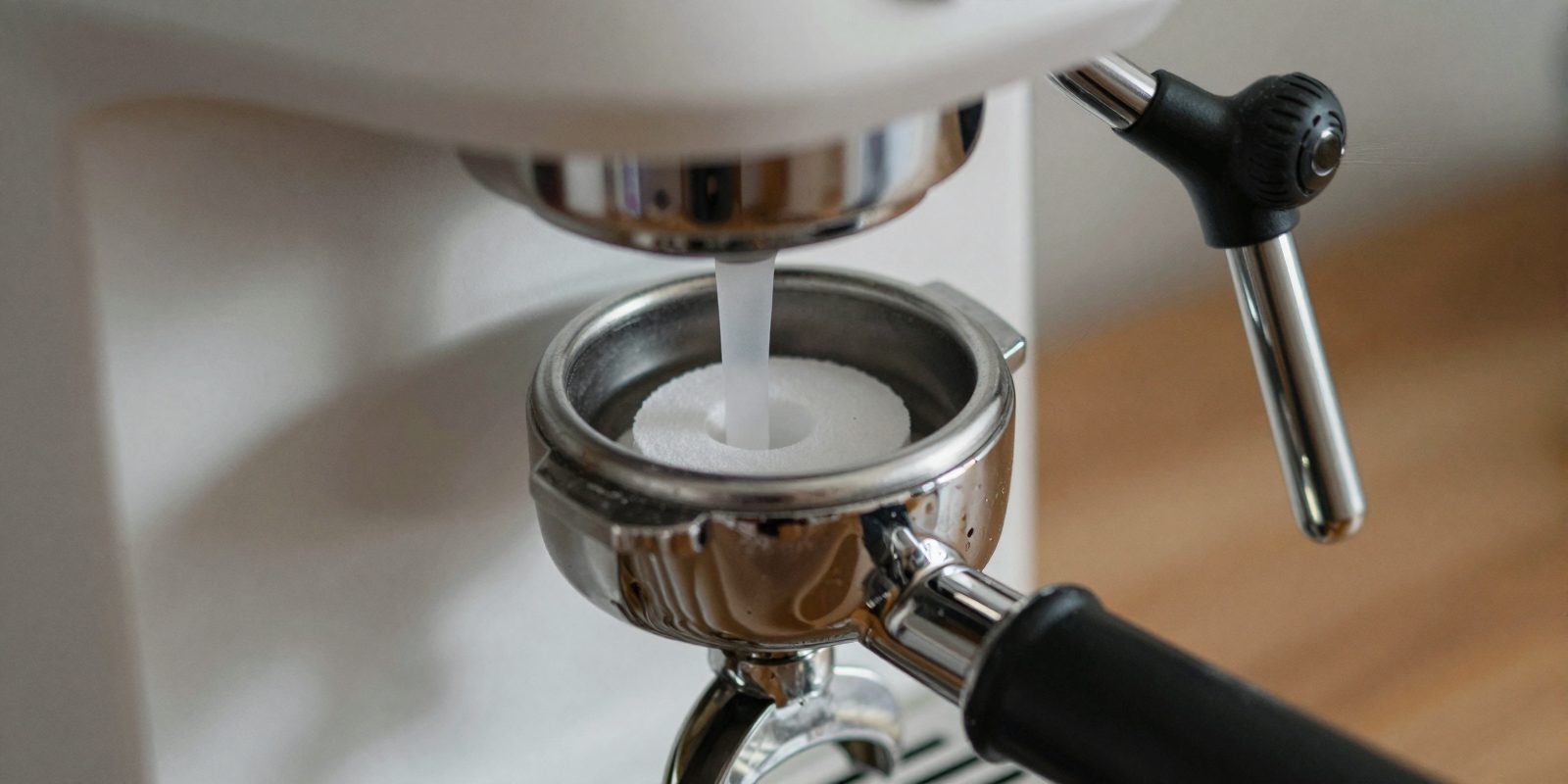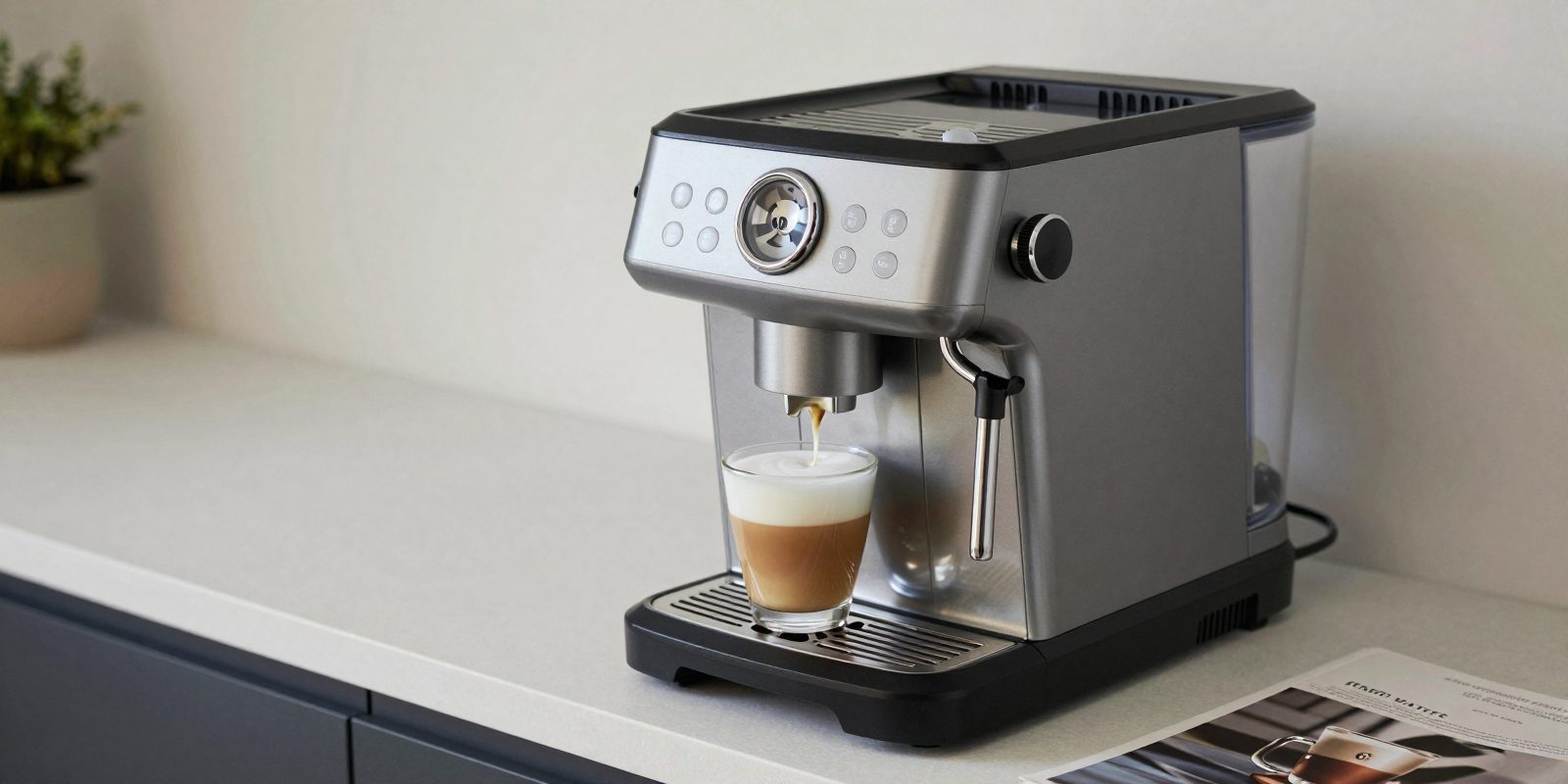
How we chose. We have not lab-tested these machines. Picks compare the makers' published features, milk systems and cleaning requirements. Australian price references were checked on 9 October 2026; a listed price or RRP does not guarantee stock, delivery or the lowest offer. We earn nothing from these links.
The short list
| Pick | Best for | Milk | Price seen (AUD) |
|---|---|---|---|
| De'Longhi Magnifica Evo ECAM290.31.SB | Black coffee and manual milk | Manual steam wand | $699 listed; notify-me |
| Philips Series 3300 LatteGo | Easy cleaning | Two-part LatteGo carafe | $1,099 RRP |
| JURA E8 Piano White INTD | Premium drink selection | Milk pipe and frother | $2,750 maker's list price |
De'Longhi Magnifica Evo
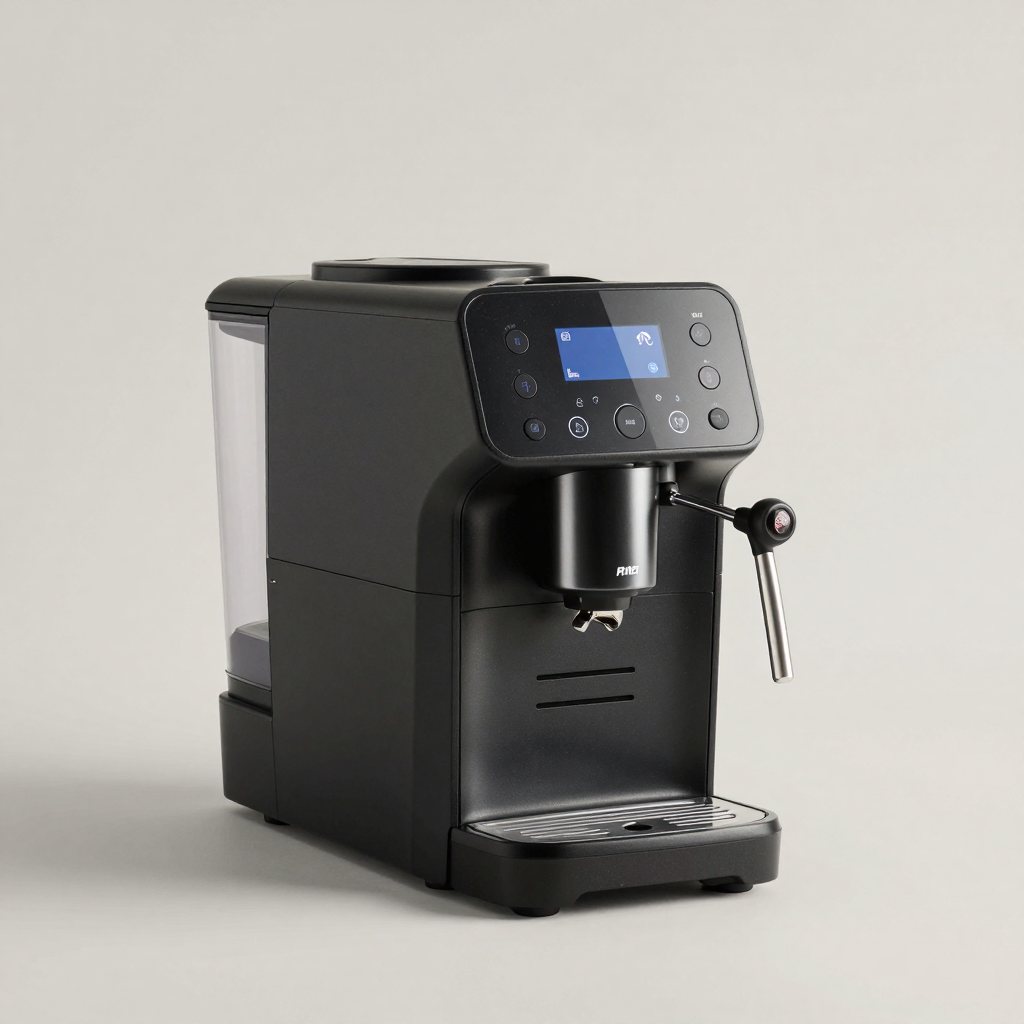
The ECAM290.31.SB automates brewing black coffee but uses a traditional wand for milk. De'Longhi's Australian page listed $699 at our check and showed a notify-me button, so do not assume immediate availability. Other Magnifica Evo variants have milk carafes; compare the full model number before buying.
Philips Series 3300 LatteGo
The EP3341/30 includes LatteGo for automatic milk drinks. Its two-part, tube-free milk assembly can be rinsed or put in the dishwasher, according to the product listing. That is useful if you want milk coffee without handling a wand. Appliances Online lists a $1,099 RRP; compare its selling price and delivery for your postcode.
Jura E8
The fifth-generation Piano White INTD model 15841 has 27 drink options and integrated rinsing, cleaning and descaling programmes. JURA's Australian product data lists a $2,750 price including GST and says this variant is made in Portugal. Older E8 generations have different features and prices. Filters, milk-system cleaner and tablets add to the running cost; the Coffee Timer also requires the optional Wi-Fi Connect V2 accessory.
Philips or De'Longhi?
Both make good machines at similar prices. In broad terms: Philips' LatteGo carafe is the simplest milk system to clean, while De'Longhi offers more models with a traditional steam wand for people who want to texture milk themselves. Compare the specific models' milk systems, bean hopper size and how the brewing unit is cleaned (some lift out for rinsing, some are fixed and cleaned by a program).
Before you buy
De'Longhi or Breville?
First compare the kind of machine. A fully automatic Magnifica, Philips or JURA handles the ground coffee inside the machine. Breville's Oracle Jet automates grinding, dosing, tamping and milk texturing, but you still move its removable portafilter between the grinder and group head, then empty the puck. Choose that style if you want a portafilter workflow with help; choose a bean-to-cup machine if you want the grounds handled internally. Breville's other models offer different levels of assistance, so the brand name alone does not answer which is easier for you.
Check the daily routine
- Milk. Carafe, milk pipe or steam wand? A carafe is easiest; a wand gives you control.
- Cleaning. A removable brew group you rinse weekly, or a fixed one with cleaning tablets? Both work if you actually do it.
- Water. Set the hardness and follow the model's filter and descaling instructions.
- Running costs. Filters, cleaning tablets and descaler add up over a year.
What to skip
- Machines whose milk system you will not clean daily.
- Buying on the number of drink buttons instead of the drinks you actually make.
How a bean-to-cup machine works
Every fully automatic machine does the same five jobs in a box: it grinds a dose of beans, tamps the grounds in a brewing chamber, pushes hot water through at pressure, ejects the spent puck into an internal bin, and, on milk models, heats and froths milk. The differences between brands are in how well each step is done and how easy the machine is to keep clean.
| Step | What happens | What to compare |
|---|---|---|
| Grinding | A burr grinder grinds beans from the hopper | Burr type, number of grind settings, how easily you can adjust it |
| Dosing | The machine weighs or measures the grounds by volume | Strength settings, and whether you can set the dose per drink |
| Brewing | Water at pressure passes through the compacted grounds in the brew unit | Removable or fixed brew unit, pre-infusion, temperature settings |
| Milk | A wand, carafe or milk pipe heats and froths milk | How many parts touch milk and how you clean them |
| Waste | Spent pucks drop into a bin; rinse water into a drip tray | Bin size, how often it needs emptying |
Grinders inside automatic machines
Most automatic machines use flat or conical burrs, usually steel or ceramic, rather than the blade grinders found in cheap spice mills. Burrs crush beans to a consistent size, which matters for flavour. Machines typically offer a range of grind steps; finer gives a stronger, more intense coffee, but too fine can choke the machine or make it bitter. Many makers say to change the grind setting only while the grinder is running, because adjusting it while idle can damage the mechanism. Check your manual before turning the dial.
Built-in grinders are a compromise: they are convenient but usually less adjustable than a good standalone grinder. If you are fussy about espresso, our best coffee grinder guide explains what a dedicated grinder adds, and why many enthusiasts pair one with a manual machine instead.
Removable or fixed brew unit
This is one of the most important differences between brands and one of the least visible in the shop.
- Removable brew unit. Many De'Longhi and Philips machines have a brewing unit you pull out from the side, rinse under the tap, let dry and refit, usually weekly. It makes it easy to see and remove coffee residue.
- Fixed brew unit. JURA machines generally have a brewing unit that stays inside and is cleaned by an automatic programme with cleaning tablets. You never see it, but you must run the programme when the machine asks.
Neither approach is wrong. A removable unit suits people who are happy to rinse it; a fixed unit suits people who will reliably run the cleaning programme and buy the tablets. The worst outcome is a removable unit nobody rinses, which can grow mould and spoil the coffee.
Milk systems compared
| System | How it works | Cleaning | Suits |
|---|---|---|---|
| Manual steam wand | A wand steams milk in a jug you hold | Wipe and purge after every use | People who want control and latte art practice |
| Carafe | A jug on the machine draws milk and froths it automatically | Rinse after use; some parts dishwasher safe | Families making several milk drinks |
| Milk pipe | A tube draws milk from a container or carton | Automatic rinse plus regular cleaning with milk cleaner | People who want one-touch drinks and will run the cleaning |
| LatteGo-type | A tube-free two-part milk container | Rinse or dishwasher | Easiest daily cleaning |
Milk is the part of any automatic machine that causes the most trouble. Old milk in a pipe or carafe sours quickly, smells, and blocks the system. Whatever you choose, plan to clean the milk parts after every session.
Water hardness, filters and descaling
Water quality varies a lot across Australia. Hard water leaves limescale inside the boiler or thermoblock and the pipes, which slows flow, affects temperature and eventually damages the machine. Most automatic machines ask you to set the water hardness when you first use them, often with a test strip supplied in the box. They then remind you to descale, or to change the water filter if you use one. Following those reminders is the single biggest thing you can do to make a machine last. Use the maker's descaler or one it approves, because some generic products can damage seals.
Running costs
The purchase price is only part of the cost. Over a year, expect to spend on:
- Beans. By far the largest cost, and the same for any machine.
- Water filters, if the model uses them, replaced every couple of months depending on use.
- Descaler, a few times a year, more in hard-water areas.
- Cleaning tablets for brew units cleaned by programme, and milk-system cleaner for pipe systems.
- Electricity, modest, especially on models with an auto-off setting.
Check the price and availability of the maker's filters and tablets in Australia before you buy. A cheaper machine whose consumables are hard to find can cost more over time.
Size, noise and practical checks
- Measure the space under the overhead cupboards; many machines need room above to fill the bean hopper and water tank.
- Check the cup height. Tall glasses for lattes or travel mugs may not fit under some spouts.
- Listen to it in the shop if you can. Grinders are noisy, and some are much louder than others, which matters in an open-plan home early in the morning.
- Look at the water tank access. Front-filling tanks are easier if the machine sits under cupboards.
- Consider pre-ground coffee. Some machines have a bypass chute for decaf or pre-ground coffee; useful in a household where one person drinks decaf.
Who should buy an automatic machine
An automatic machine suits people who want good coffee from fresh beans without learning to make espresso: a household making several coffees a day, an office kitchen, or anyone who values convenience over control. It suits less well people who want to experiment with beans and extraction, or who mostly drink milk coffee and enjoy steaming milk; for them, a manual or semi-automatic machine with a good grinder often gives better coffee for the money. Our best coffee machine for home guide compares the types.
Warranty and repairs in Australia
Every machine sold in Australia comes with the consumer guarantees under the Australian Consumer Law, which sit alongside the maker's warranty. Before buying, check who repairs the machine locally, how long repairs take, and whether parts such as brew units and milk systems are available. Machines with removable parts can often be fixed by swapping a part; others need to go to a service centre. Keep the receipt and register the machine with the maker if that extends the warranty.
A cleaning schedule that keeps the coffee good
| How often | Job |
|---|---|
| After each milk drink | Run the milk rinse, or rinse the carafe or wand |
| Daily | Empty the grounds bin and drip tray; rinse the water tank and refill with fresh water |
| Weekly | Rinse a removable brew unit and let it air-dry; wash the milk parts thoroughly |
| When prompted | Run the cleaning programme with a tablet; run the milk-system clean |
| Every few months, or when prompted | Descale; replace the water filter if fitted |
Most "the coffee tastes bad" complaints come from a skipped step in this table, not from the machine itself.
Beans for automatic machines
The beans matter more than the brand of machine. A few rules help automatic machines in particular:
- Avoid very oily, dark-roasted beans. Oil on the bean surface can build up in the grinder and the chute and block them. Many makers advise against them.
- Buy fresh, whole beans and keep the hopper topped up with a quantity you will use within a week or two. Beans left in an open hopper go stale.
- Do not put pre-ground coffee in the bean hopper, only in the bypass chute if the machine has one.
- Medium roasts usually suit automatic machines and milk drinks well; experiment with the strength and grind settings to taste.
Our arabica vs robusta guide explains how bean type changes flavour and caffeine.
The drinks an automatic machine makes
Most machines offer espresso, a longer black coffee, and, on milk models, cappuccino, flat white and latte at the touch of a button. Some add ristretto, lungo, americano and hot water. The names can be confusing, because a "long black" and an "americano" are made differently in Australian cafés, and a machine's "lungo" is a longer extraction rather than espresso topped with water. Our guides to ristretto vs lungo, long black vs americano and the magic, macchiato and cortado explain each drink, so you can set the machine's recipes to match what you order at your café.
Strength, volume and temperature settings
Bean-to-cup machines let you adjust a handful of settings, usually through the display or an app:
- Strength, which changes how much coffee is ground per shot.
- Volume, the amount of water pushed through.
- Temperature, often in a few steps.
- Milk quantity and froth, on milk models.
Start with the factory settings for a week, then change one thing at a time. If the coffee is weak and watery, try a stronger setting or a smaller volume before changing the grind. If it is harsh and bitter, try a coarser grind or a lower temperature.
Troubleshooting
| Problem | Common cause | First fix |
|---|---|---|
| Weak, watery coffee | Volume too large, grind too coarse, stale beans | Lower the volume, fine the grind a step, use fresher beans |
| Bitter coffee | Grind too fine, temperature too high, dirty brew unit | Coarser grind, lower temperature, clean the brew unit |
| Milk will not froth | Milk parts blocked or not assembled correctly; milk too warm | Clean and reassemble; use cold milk |
| Coffee only drips out | Grind too fine, scale build-up | Coarser grind; descale |
| Machine asks to descale constantly | Hardness set too high or the cycle was not completed | Check the hardness setting; complete the descale |
| Grinder noise changes | A stone or foreign object, or an empty hopper | Stop and check the hopper; contact the service centre if it persists |
If a fault persists after cleaning and descaling, contact the maker's service centre rather than opening the machine.
Automatic machine or pod machine?
Pod machines are cheaper to buy and simpler to use, and the pods keep coffee consistent. But the cost per cup of pods is usually higher than fresh beans, and the choice of coffee is limited to what comes in pods. Automatic bean-to-cup machines cost more upfront and need more cleaning, but use whole beans you can buy anywhere. For a household drinking several coffees a day, an automatic machine often pays back its higher price over a few years. Work out how many coffees you make a week and compare the cost of beans with the cost of pods.
Buying second-hand or refurbished
Automatic machines turn up second-hand often, because people upgrade or give up on cleaning. A used machine can be good value if it has been descaled and cleaned regularly. Ask for the model number, its age, and its maintenance history; check whether the maker still supplies parts and filters; and test it if you can, including a milk drink. Refurbished machines from the maker or an authorised retailer usually come with a warranty, which makes them a safer bet than a private sale.
Choosing in five steps
- Decide on milk. Black only, a wand you control, or one-touch milk.
- Set a budget that includes a year of filters, tablets and descaler.
- Compare cleaning: removable brew unit or programme, and the milk system's parts.
- Check the space and cup height in your kitchen.
- Check local service and parts availability for the brand.
Then shortlist two or three machines that fit, and choose on the drinks you actually make every day, not the number of buttons.
The brands, in broad strokes
Several brands sell fully automatic machines in Australia, and each has a recognisable approach. These are general patterns, not reviews; compare the specific model in front of you.
| Brand | General approach | Brew unit | Worth knowing |
|---|---|---|---|
| De'Longhi | The widest range, from basic wand models to large touch-screen machines | Usually removable | Many models share parts and accessories across ranges |
| Philips | Mid-priced machines built around easy milk cleaning | Usually removable | LatteGo milk systems are tube-free |
| JURA | Swiss premium machines with automatic cleaning programmes | Usually fixed | Proprietary filters and tablets; strong service focus |
| Miele | German premium machines, many built-in options for kitchens | Usually removable | Some models make two milk drinks at once |
| Siemens | German machines, including built-in models | Usually removable | Ranges often named by series numbers |
| Breville | Australian brand; its Oracle range automates a portafilter machine | Not a bean-to-cup brew unit | Suits people who want a café-style workflow with help |
Built-in models, which sit in a kitchen cabinet column like a wall oven, are a separate category from benchtop machines. They cost more and need a cabinetry plan, but they free the bench and suit renovations.
Automatic machines for an office or a busy household
A machine making twenty coffees a day works much harder than one making four. For heavy use, look for a larger bean hopper, water tank and grounds bin, a milk system that copes with repeated drinks, and a maker that rates the machine for that volume. If refilling the tank is a chore, a plumbed-in machine connects to the water supply; our plumbed-in coffee machine guide explains what that involves. For offices, also check who will do the daily cleaning, because a machine shared by many people is often cleaned by none.
Warm-up time and energy use
Most automatic machines are ready in a minute or two from cold, much faster than many traditional espresso machines with a large boiler. They usually rinse the coffee spout when they switch on and off, which uses a little water and sends it to the drip tray. Most have an auto-off timer and an energy-saving mode; setting a short auto-off saves electricity without much inconvenience. Cup warmers on top of some machines keep cups warm for a better espresso, at a small energy cost.
Apps and connectivity
Some machines connect to a phone app to choose drinks, save personal recipes or show maintenance reminders, and a few need an accessory for it. Apps can be handy for setting up favourite drinks, but they are rarely essential. Check what still works without the app and whether the maker supports it in Australia before paying more for a connected model.
Safety at home
Automatic machines use very hot water and steam. Keep children away from the spouts and steam wand, empty and dry the drip tray to avoid scalds from overflowing hot water, and never run a descaling cycle without the drip tray and a container in place. Switch the machine off and unplug it before removing internal parts such as the brew unit.
How long to expect it to last
How long a machine lasts depends mostly on how it is looked after: regular descaling, cleaning of the brew unit and milk parts, and decent water. Machines that are neglected tend to fail early with scale, blocked milk systems and worn brew units; machines that are cleaned and serviced can last many years. The warranty, the availability of parts and the maker's service network in Australia are good signs of how long a brand expects its machines to run.
Questions to ask in the shop
- Is the brew unit removable, and how often should I clean it?
- Which parts of the milk system touch milk, and are they dishwasher safe?
- What filters, cleaning tablets and descaler does it need, and what do they cost?
- How tall a cup fits under the spout?
- Who services it in my area, and how long do repairs usually take?
- What warranty does the maker give, and does registering extend it?
A good retailer can answer all six. If they cannot, the manual, which most makers publish online, usually can.
Getting the best coffee from an automatic machine
Most owners use the factory settings forever and wonder why the coffee tastes ordinary. A few changes in the first week make a big difference:
- Set the water hardness with the test strip supplied, so descaling prompts are right.
- Fill the hopper with fresh, medium-roast beans rather than the oldest bag in the pantry.
- Run a few coffees to settle the grinder, then try one step finer if the coffee is weak.
- Raise the strength and lower the volume for milk drinks, so the coffee is not drowned.
- Warm the cup, using the cup warmer or a rinse of hot water; a cold cup steals heat from a small espresso.
- Use cold, fresh milk in the milk system, and clean it after every session.
After a week, taste the same drink with the settings you started with and the settings you ended with. Most people do not go back.
Matching the machine to the drinks you make
| You mostly make | Look for |
|---|---|
| Espresso and long blacks | A good grinder range, strength settings, a hot-water spout |
| One milk coffee a day | A manual steam wand or a simple carafe |
| Several milk coffees for a household | An automatic carafe or milk pipe with easy cleaning, and a large water tank |
| Iced coffee in summer | A cold-milk or cold-brew setting, if offered |
| Decaf for one person | A bypass chute for pre-ground coffee |
| Café-style flat whites and latte art | A steam wand, or consider a manual machine with a good grinder instead |
What "made for Australia" means
Australian cafés serve flat whites, long blacks and magics that European-designed machines do not always name. Many machines let you create and save your own recipes, so you can set a flat white as a double shot with a smaller amount of silky milk, or a long black as hot water first and espresso second. Our long black vs Americano and magic, macchiato and cortado guides explain the recipes, so you can set them up properly.
Returns and changes of mind
Under the Australian Consumer Law, a retailer does not have to give a refund for a change of mind, though many offer one under their own policy. If you are unsure whether a machine will suit you, check the retailer's change-of-mind policy before buying, and keep the box until you are happy with it. If the machine has a fault, the consumer guarantees apply whatever the store's policy.
How to compare two machines in the shop
Stand them side by side and work through the same checklist for each: the milk system and its parts; whether the brew unit comes out; the size of the bean hopper, water tank and grounds bin; the cup height under the spout; how the controls work; and the price of its filters and cleaning tablets. Ask to see the machine's manual, or look it up on the maker's site on your phone, and read the cleaning section. The machine whose daily routine you can live with is the right one.
Automatic machines and coffee quality
A well-set automatic machine with fresh beans makes good coffee, but it is a different kind of good from a skilled barista on a manual machine. The automatic machine wins on consistency and convenience; the manual machine wins on control and the texture of hand-steamed milk. If you mostly want reliably good coffee with no fuss, an automatic machine is a sound choice; if you want to chase café-quality espresso and latte art, our best coffee grinder guide and a manual machine are the better path.
Frequently overlooked costs
- Replacement milk tubes or carafe parts after a few years.
- A service if the brew unit or grinder wears.
- Descaling products in hard-water areas.
- Mugs and cups that fit under the spout.
Automatic machines and the environment
Fully automatic machines use whole beans and no capsules, so they create less packaging waste than pod machines. Spent grounds from the internal bin are good for compost or the garden. Energy use is modest, especially with a short auto-off timer, and descaling on schedule keeps the heating element efficient. When a machine reaches the end of its life, take it to an e-waste collection point rather than the rubbish bin.
Common mistakes new owners make
- Skipping the water hardness setting, so the machine scales up early.
- Leaving milk in the carafe or pipe for hours or overnight.
- Never rinsing a removable brew unit.
- Using oily, very dark beans that clog the grinder.
- Ignoring the descale prompt for weeks.
- Putting pre-ground coffee in the bean hopper.
- Turning the grind finer straight away. Most machines only change the grind while the grinder is running, so make small changes over several coffees and taste between each one.
Is an automatic machine worth the money?
If you buy two café coffees a day, the cost adds up quickly over a year, and an automatic machine that makes those coffees at home with good beans can pay for itself well within its life, even after filters, tablets and descaler. If you drink one coffee a day and enjoy the café visit, the case is weaker. The real value is often convenience: good coffee at home without learning a craft.
Who should not buy one
- People who will not clean the milk system after each use.
- Households with very little bench space under high cupboards.
- Coffee lovers who want to experiment with extraction and latte art.
- People who drink only one or two black coffees a week; a plunger, moka pot or pour-over costs far less.
A first-week checklist for a new machine
- Read the quick-start guide and the cleaning section of the manual.
- Run the first rinse cycles the manual asks for, and discard the first few coffees.
- Set the water hardness and fit the water filter if supplied.
- Set the language, cup volume and auto-off time.
- Make your usual drink at the default settings, then adjust strength and volume.
- Practise cleaning the milk system and the brew unit once, so you know how.
- Register the warranty with the maker.
- Put a reminder in your phone for weekly cleaning and for buying filters and tablets.
Machines for small kitchens
Compact automatic machines exist for narrow benches and apartments. They usually have smaller water tanks, hoppers and grounds bins, so they need emptying and refilling more often, and some skip features such as a second boiler or a large milk carafe. If space is tight, measure the width, depth and the height under your cupboards, and remember that you need room to open the water tank and pull out the drip tray. A compact machine you can use comfortably beats a bigger one that sits jammed against the splashback.
When to call for service
Most problems are solved by cleaning, descaling and checking the settings. Call the maker's service centre when the machine shows an error code that the manual's steps do not clear, leaks water from underneath, makes grinding or pumping noises that are new and loud, or will not heat. Do not open the casing yourself: it voids many warranties and exposes live parts and hot water. Have the model number, serial number, purchase date and a short description of the problem ready when you call, and keep a record of the cleaning and descaling you have done, because some warranty claims ask for it.
Our short answer
Choose a fully automatic machine for the milk system you will actually clean and the drinks you make every day. On the makers' published features, the De'Longhi Magnifica Evo with a manual wand suits black-coffee drinkers and those who like to steam their own milk; Philips' LatteGo machines suit people who want the easiest milk cleaning; JURA suits buyers who want a premium machine with automatic cleaning programmes and will buy its tablets and filters. Set the water hardness, use fresh medium-roast beans, clean the milk parts every time and descale on schedule, and any of them will make good coffee for years.
Where to buy
Automatic machines are sold by the makers' own Australian online stores, major appliance and department stores, and specialist coffee retailers. Specialist retailers can be more helpful with set-up and servicing; large stores often have sharper prices and easy returns. Whichever you choose, check the delivery, the change-of-mind policy and who handles warranty repairs, and compare the total cost including the first year's filters and tablets rather than the sticker price alone.
Automatic machines for coffee beginners
If you have never made espresso, an automatic machine is the gentlest way in. You learn which beans you like, how strength and milk change a drink, and what fresh coffee tastes like, without the learning curve of grinding, dosing and tamping by hand. Many people later move to a manual machine once they want more control; others are happy with the convenience for good. Either way, the beans and the cleaning habits you learn carry over.
Gifts and shared households
An automatic machine is a popular gift and a common shared purchase in share houses. In a shared home, agree who cleans the milk system and empties the bin, and buy the filters and tablets as a household cost. A machine everyone uses and nobody cleans is the fastest way to bad coffee and an early repair bill.
Whichever machine you choose, the habits on this page, fresh beans, clean milk parts and timely descaling, matter more than the badge on the front.
Common questions
What is the best fully automatic coffee machine in Australia?
It depends on budget and milk. For value, the De'Longhi Magnifica Evo range; for the easiest milk cleaning, Philips' LatteGo machines; for a premium machine, Jura.
Which is better, DeLonghi or Philips automatic coffee machine?
Neither is better across the board. Philips LatteGo is easier to clean; De'Longhi has more models with a manual steam wand. Compare specific models.
Do automatic machines make good coffee?
They can make convenient coffee with freshly ground beans. The beans, strength and grind settings still matter. A manual machine gives more control over dose and extraction, but requires more work and practice.
How long do automatic coffee machines last?
There is no single lifespan across these models. Check the warranty, local repair support and replacement-parts availability, and follow the specific cleaning and descaling schedule.
Sources
- De'Longhi Australia, Magnifica Evo ECAM290.31.SB (steam wand and dated listed price)
- Appliances Online, Philips Series 3300 fully automatic (EP3341) listing
- Philips Australia, Series 3300 EP3341/30 (drink and milk features)
- JURA Australia, E8 Piano White INTD 15841 (current generation, Australian list price and production country)
- Breville Australia, Oracle Jet (automated preparation with a removable portafilter)