The short answer
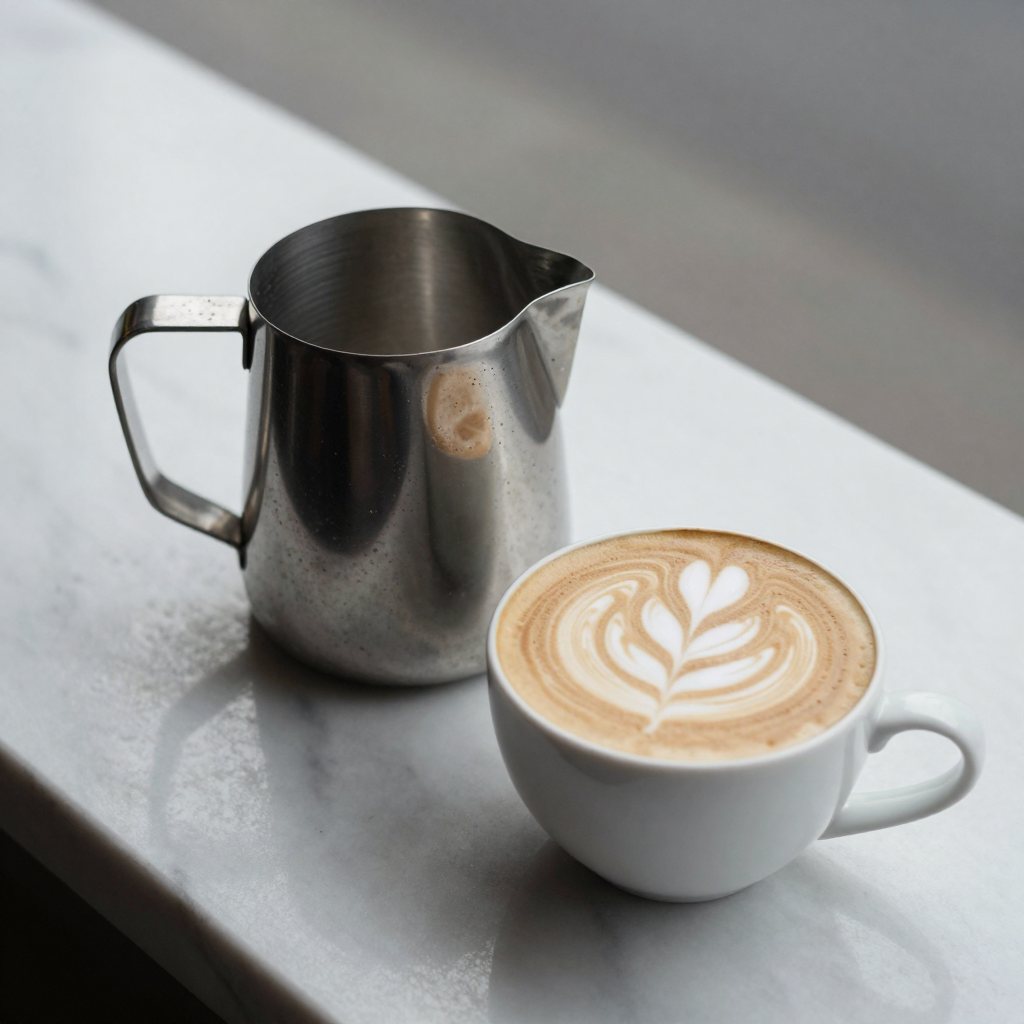
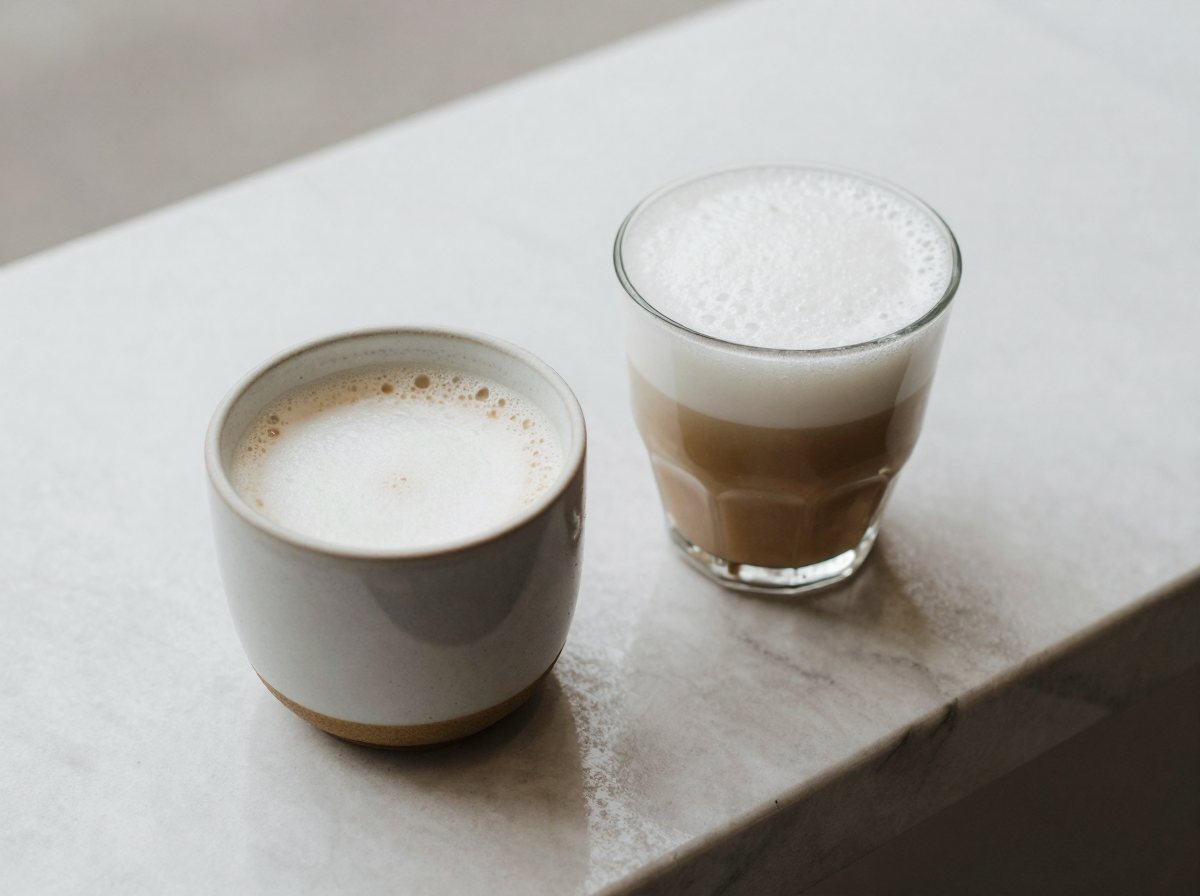
A flat white is a single or double shot of espresso topped with steamed milk that has a thin layer of fine, glossy microfoam, served in a small cup (in most Australian cafés, around 160 to 200 ml). A latte is the same espresso with more milk and a slightly deeper layer of foam, traditionally served in a glass or a larger cup. Neither drink is defined by law or by a standards body, so every café's recipe differs a little; these are the common Australian conventions.
Flat white
- Espresso
- Single or double shot
- Milk
- Less, steamed to a silky texture
- Foam
- Thin, about 0.5 cm
- Served in
- Small ceramic cup
- Tastes
- More coffee-forward
Latte
- Espresso
- Single or double shot
- Milk
- More, steamed a little airier
- Foam
- Deeper, about 1 cm
- Served in
- Glass or larger cup
- Tastes
- Softer and milkier
Is a flat white stronger than a latte?
If both use the same shot, they contain the same caffeine. A flat white tastes stronger because there is less milk to dilute the espresso. Some cafés pour flat whites with a double shot by default and lattes with a single, which does make the flat white stronger, so ask if it matters to you.
For scale, healthdirect Australia's current table gives 145 mg of caffeine for a 50 ml espresso. That is an example, not a fixed amount per flat white: the beans, dose and number of shots change what is in your cup.
Is the flat white an Australian thing?
Both Australia and New Zealand claim it, and the argument is part of the fun. On the Australian side, Alan Preston put a "flat white" on the permanent menu of Moors Espresso Bar in Sydney in 1985, and a review of the Sydney café Miller's Treat in May 1983 already mentions a "flat white coffee". On the New Zealand side, Fraser McInnes says he served the first one in Wellington in 1989, when milk would not foam properly for a cappuccino and he apologised for the "flat white". What is not in dispute is that the drink grew up in Australian and New Zealand cafés and was exported from there to London, New York and beyond.
How cafés make each one
- Pull the espresso into the cup: a single (about 30 ml) or a double (about 60 ml).
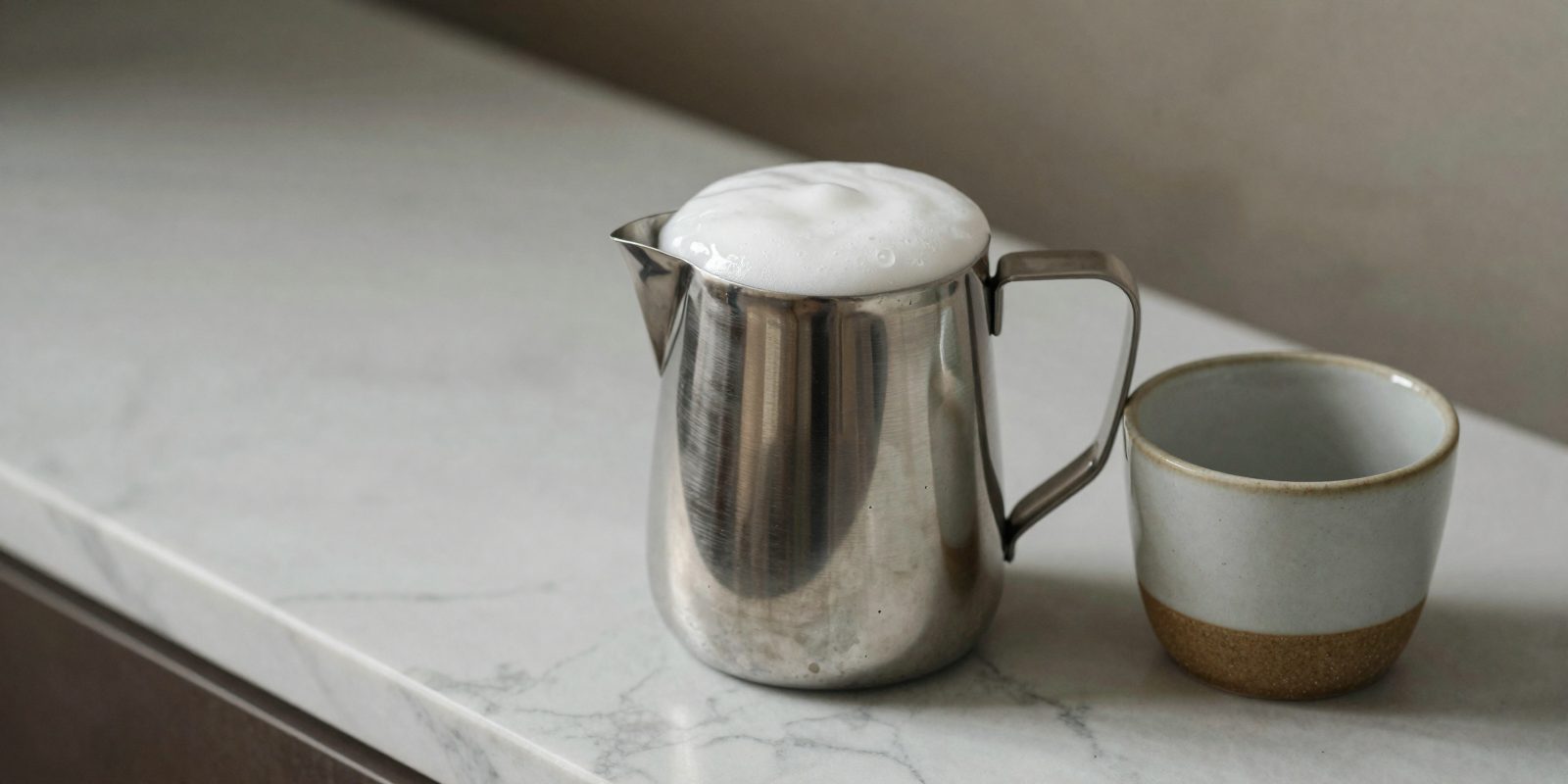
- Steam the milk. For a flat white, let in only a little air at the start (a few seconds of a quiet "tearing paper" sound), then sink the wand and spin the milk until it is glossy and about 60 to 65°C. For a latte, add a little more air for a slightly deeper foam.
- Pour. A flat white is poured low and fast so the foam stays thin and a small pattern forms on top. A latte is poured to fill a bigger cup or glass, finishing with about a centimetre of foam.
Making both at home
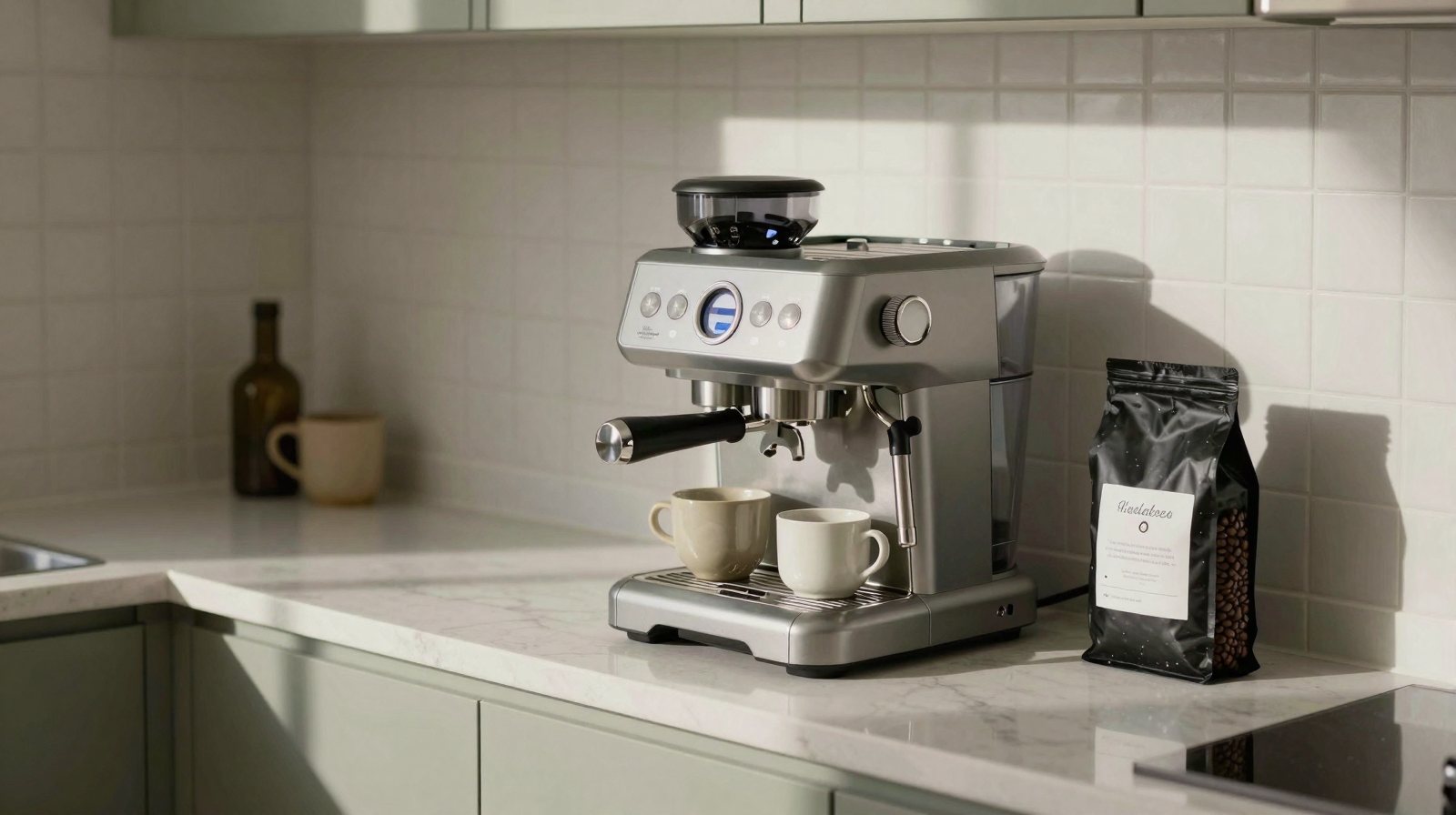
The milk is the hard part. A steam wand on an espresso machine gives you the most control. If your machine has an automatic wand (the Breville Bambino Plus, for example), choose the lowest foam setting for a flat white and the middle one for a latte. Without a steam wand, an electric frother can get close: see the best milk frothers. Full-cream milk is easiest to texture; barista-style plant milks are made to foam like dairy.
Is a latte or flat white healthier?
The name of the drink does not establish whether it suits your health. A latte usually has more milk than a flat white, so it carries more of whatever is in that milk, kilojoules included. Cup size, milk, syrup and sugar matter more than the name. Caffeine depends on the espresso dose. Healthdirect's general guidance for healthy adults is around 400 mg a day from all sources; pregnancy, medicines, medical conditions and sensitivity can change the advice for you.
Common questions
Is a flat white stronger than a latte?
It tastes stronger because there is less milk, but with the same shot the caffeine is the same. Some cafés use a double shot in a flat white by default.
Is flat white an Australian thing?
Australia and New Zealand both claim it. Sydney has the earliest written mentions (1983 and 1985); Wellington has the most famous origin story (1989).
What is healthier, a latte or flat white?
A flat white usually has less milk, so it has fewer kilojoules than a latte of the same milk type. The cup size and milk choice matter more than the drink's name.
Why is a flat white so high in calories?
It usually is not; it is one of the smaller milk coffees. The kilojoules come from the milk, so a larger cup or full-cream milk adds more.
Is 2 flat whites a day too much?
A cup count alone cannot tell you. Two double-shot coffees can contain much more caffeine than two single-shot coffees, and tea, chocolate and other drinks add to the total. Check the shots and your own sensitivity; ask your doctor or pharmacist about pregnancy, medical conditions or medicines.
What is the difference between a flat white and a cappuccino?
A cappuccino has a much thicker layer of airy foam, often dusted with chocolate. A flat white has very little foam.
Sources
- Wikipedia, Flat white (history, Moors Espresso Bar 1985, the 1983 Miller's Treat review, the Wellington claim)
- Tasting Table, The murky origin of the flat white
- healthdirect Australia, caffeine (current espresso example and individual limits)
- Food Standards Australia New Zealand, safety aspects of dietary caffeine