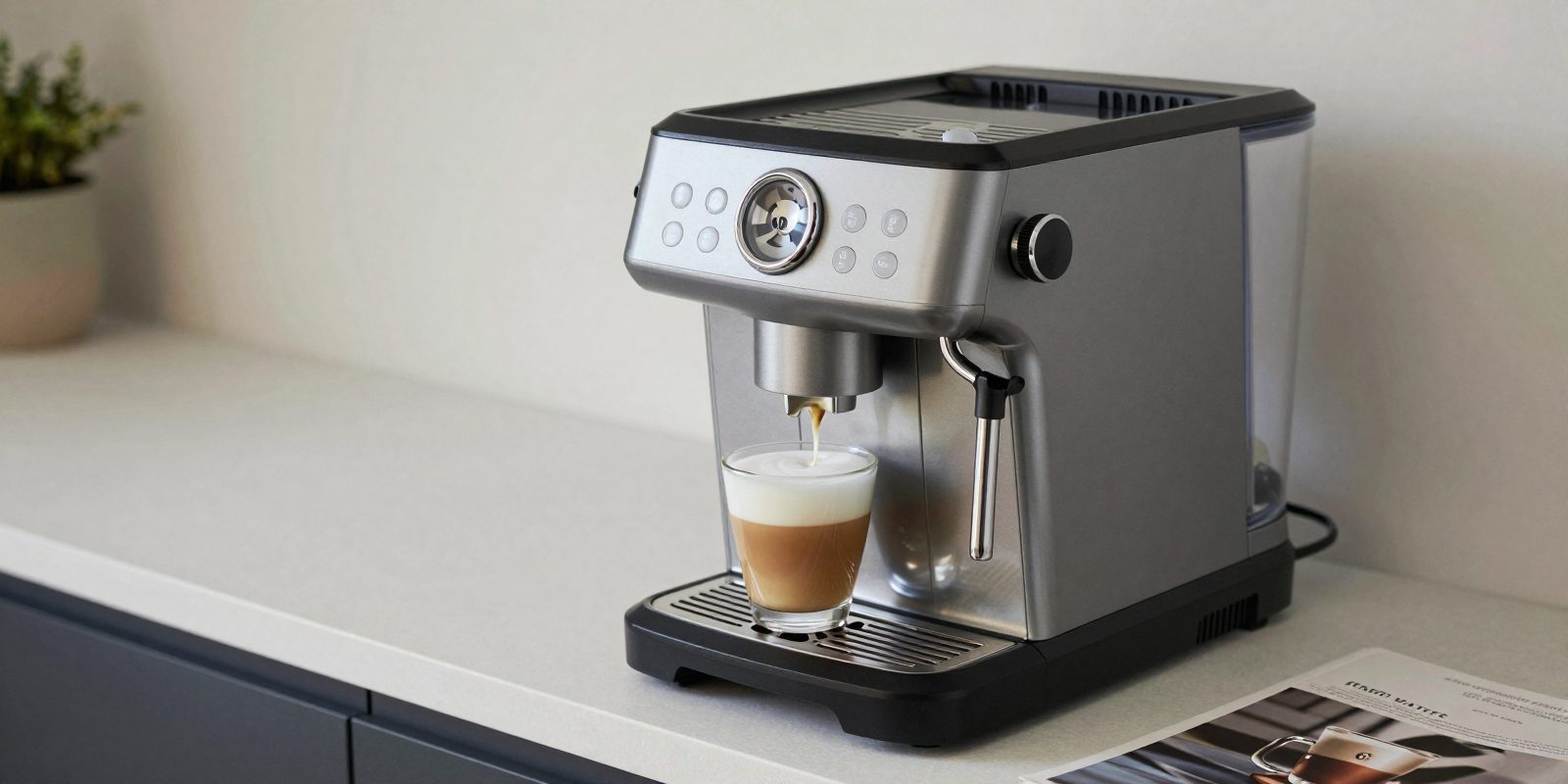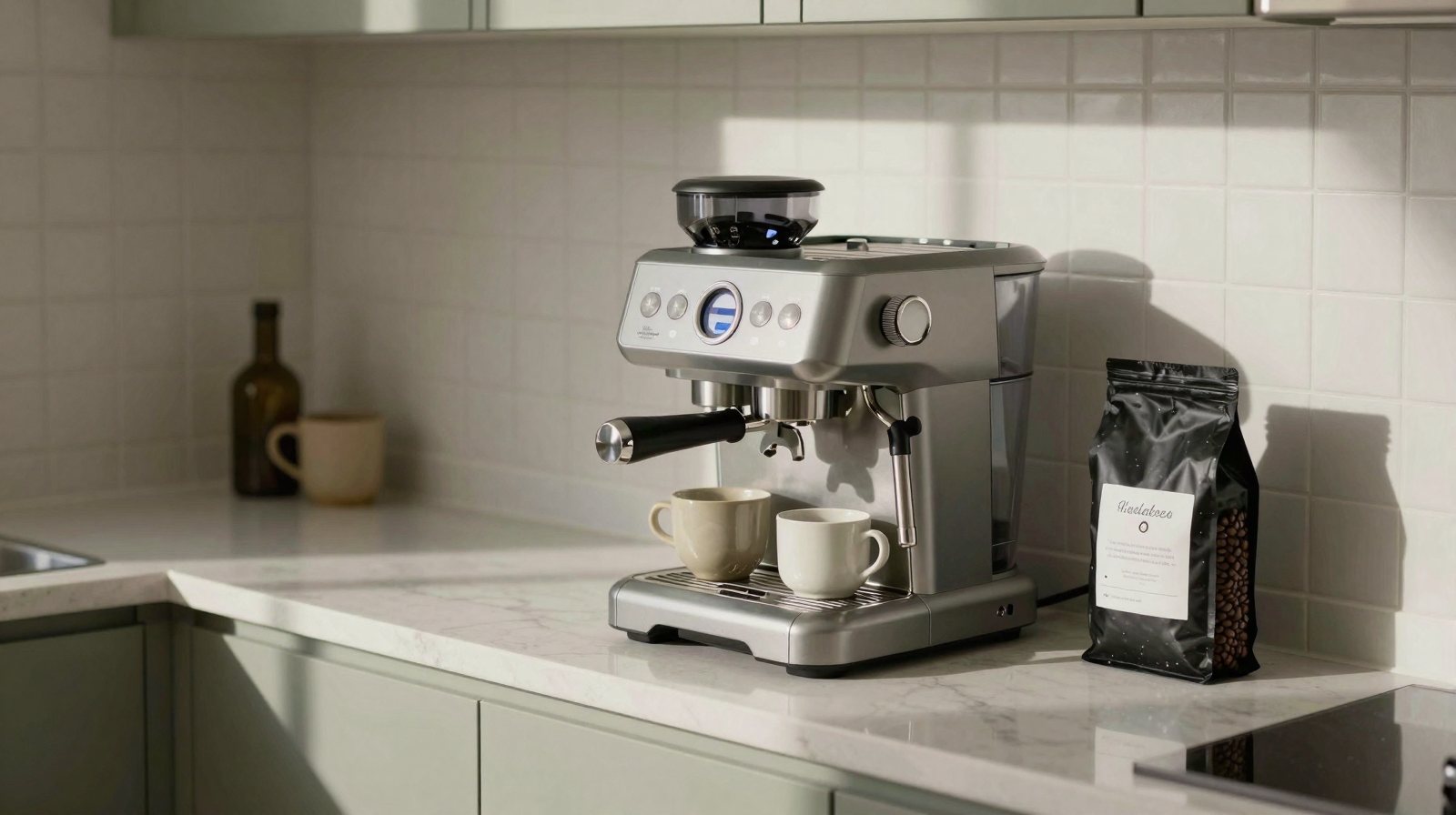
How we chose. Equipment pictures are generic illustrations, not photographs of the named models. We have not lab-tested these machines. Picks compare published heating, basket, grinder and milk features. Australian price references were refreshed on 9 October 2026 where the named listing could be verified; the Classic Evo Pro's current price and stock were not verified. Check the exact variant and availability before buying. Nothing here is for sale from us, and we earn nothing from these links.
The short list
| Pick | Best for | Type | Basket | Price seen (AUD) |
|---|---|---|---|---|
| Breville Barista Express Impress | Assisted tamping, one appliance | Manual, grinder built in | 54 mm | $799 maker listing |
| Breville Bambino Plus | Small kitchens, milk drinks | Manual, no grinder | 54 mm | $499 maker listing |
| Gaggia Classic Evo Pro | Learning with a single boiler | Manual, single boiler | 58 mm | Check model and stock |
| De'Longhi Magnifica Evo ECAM290.31.SB | Automatic black coffee, manual milk | Bean-to-cup, steam wand | n/a | $699 listed; notify-me |
| Lelit Bianca V3 | Enthusiasts | Dual boiler, E61 group | 58 mm | $4,799–4,999 by finish |
Prices are specific Australian listing references checked on 9 October 2026, not a survey of every retailer or a guarantee of stock. Di Pacci displayed $4,799 for the stainless Bianca V3 and $4,999 for the black/white maple finishes; confirm the selected variant and delivery. De'Longhi's page showed a notify-me button at our check.
How to choose in two questions
1. How much do you want to do? A manual machine gives you control over the dose, tamp and steaming, with different levels of assistance. A bean-to-cup machine handles the ground coffee internally; milk may still need a manual wand, depending on the model. Compare the actual daily routine rather than assuming "automatic" means every drink is hands-free.
2. Do you already own an espresso-capable burr grinder? If so, a separate machine can use it. Otherwise, compare the combined cost and bench space of two appliances with a machine that has a grinder built in. Check that your grinder can adjust finely enough for the basket you intend to use.
Breville Barista Express Impress
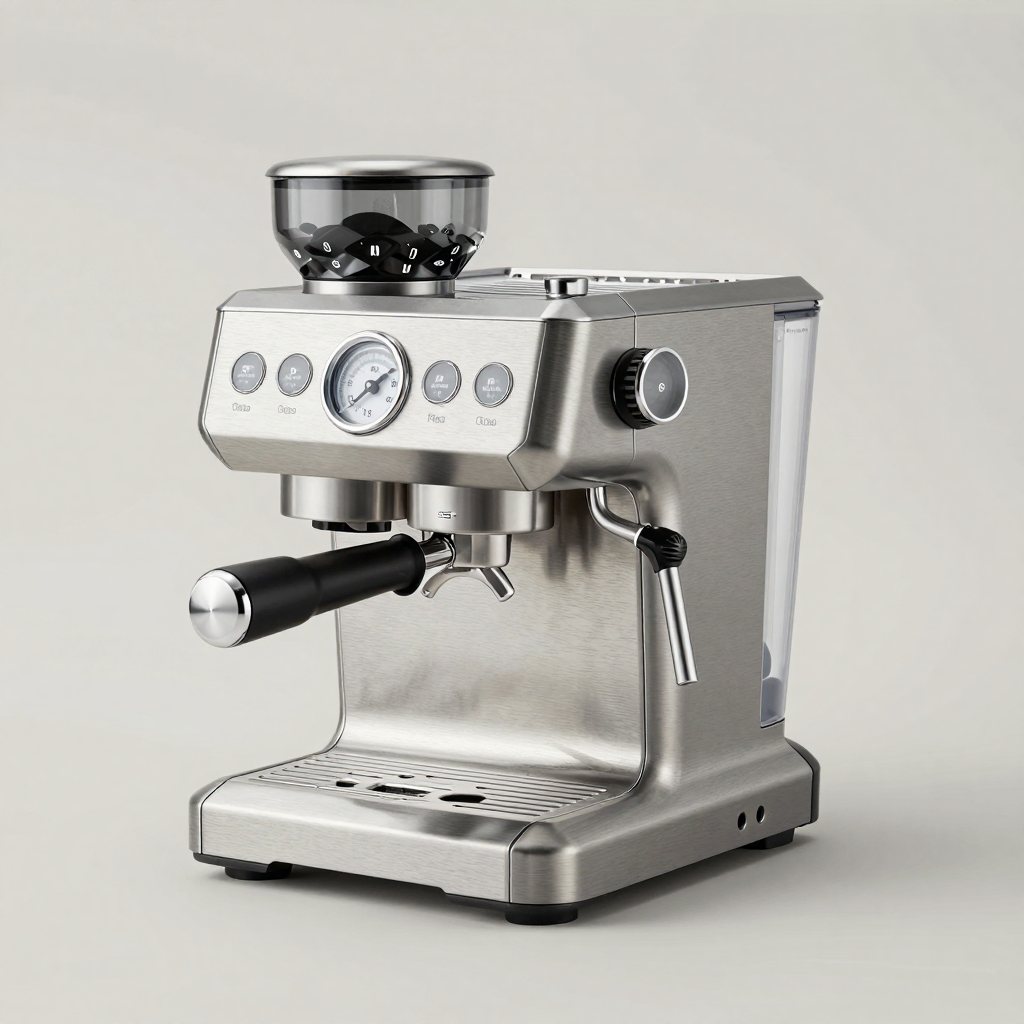
The built-in grinder doses into the portafilter and the lever assists tamping. You still move the portafilter, brew the shot and use the manual steam wand. Breville publishes a Thermocoil heater with PID control at 93°C; its listed dose and grind assistance do not remove the need to dial in the beans.
Good for
- A first espresso machine
- Milk drinks most mornings
- One box on the bench instead of two
Skip it if
- You already own a good grinder
- You make back-to-back coffees for a crowd
Breville Bambino Plus
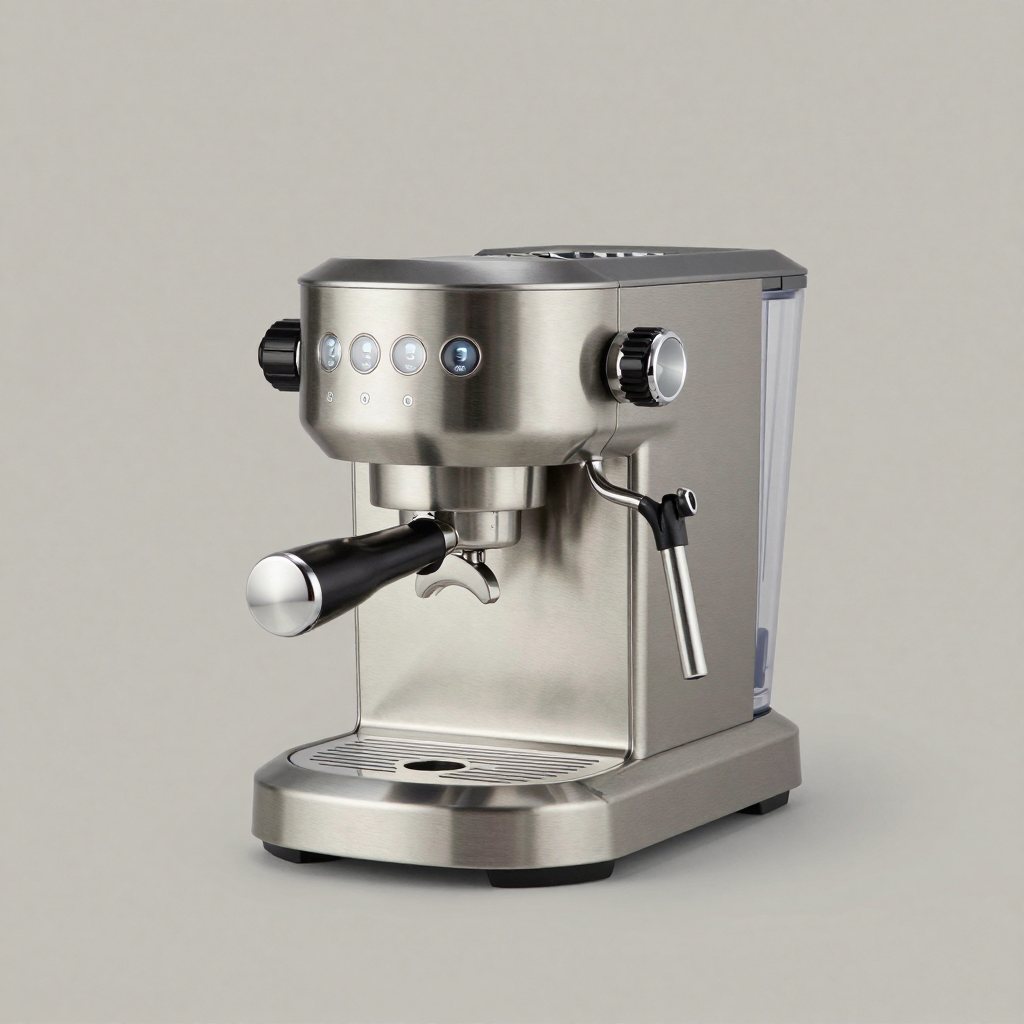
Narrow enough for a rental kitchen and hot in about three seconds, because its ThermoJet heater warms water on the way through instead of holding a boiler hot. The automatic steam wand textures milk to a temperature and foam level you choose, which is the hardest skill for new home baristas. It has no grinder: pair it with a burr grinder from our grinder guide, because pre-ground coffee goes stale within days and wastes what this machine can do.
Good for
- Small benches and apartments
- Flat whites and lattes with little practice
Skip it if
- You do not want to buy a grinder as well
- You want to learn to steam milk by hand
Match the water to your machine
Mineral scale is one reason machines need maintenance. Water varies within a city, and a city average is not a measurement of your tap. Follow the maker's hardness-test, filter and descaling instructions; a filter jug does not necessarily soften water. Our city table gives regional context and its source.
Gaggia Classic Evo Pro
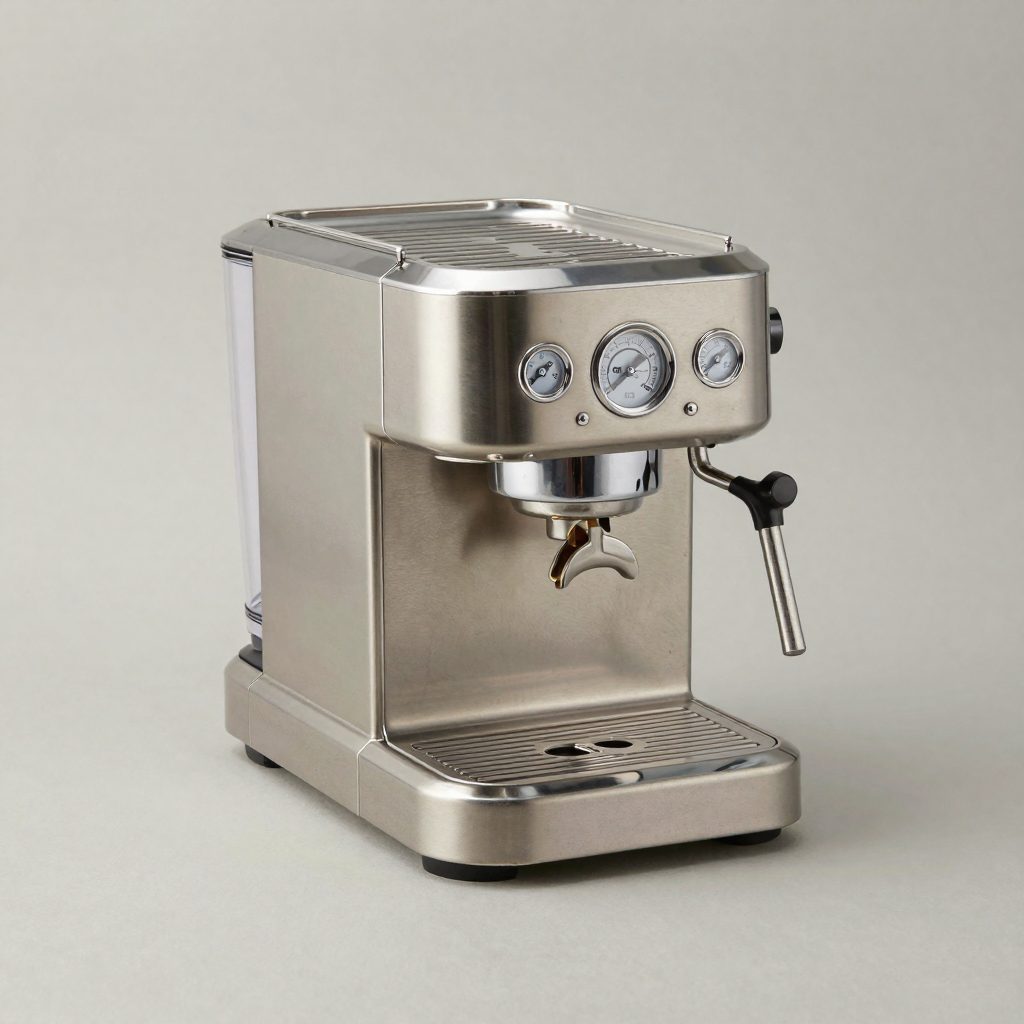
A traditional single-boiler machine with a 58 mm portafilter, requiring a separate grinder and switching between brewing and steaming. Nominal 58 mm size does not mean every accessory fits: check the actual basket and portafilter. Classic generations differ, so confirm the Evo Pro's exact revision, local stock and repair support rather than applying its specifications to a newer Classic model.
Good for
- People who want to learn espresso properly
- Straight espresso and the odd milk drink
Skip it if
- You make several milk drinks in a row every morning
- You want the machine to do the thinking
De'Longhi Magnifica Evo
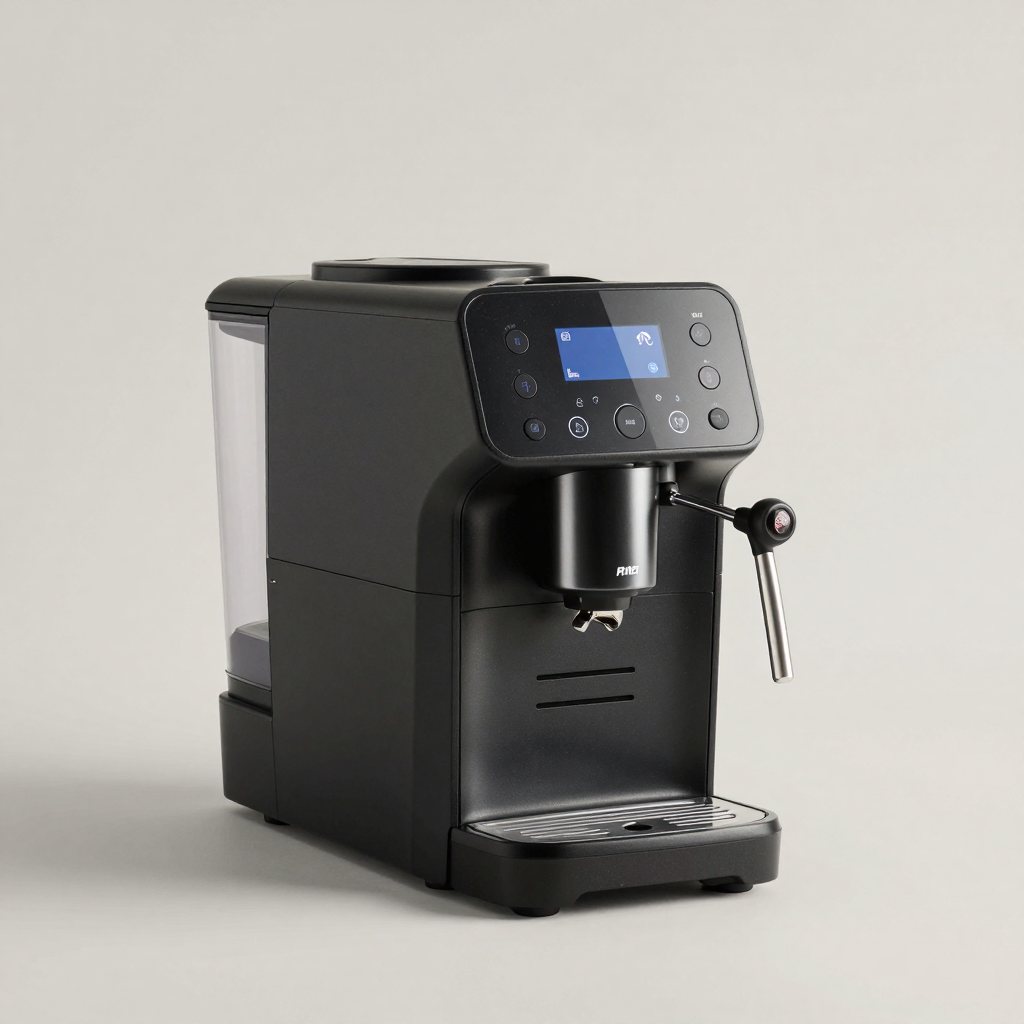
The ECAM290.31.SB grinds and brews inside the machine but uses a traditional wand for milk. De'Longhi's Australian page listed $699 with a notify-me button at our check. Other Magnifica Evo models offer a milk carafe; compare the full model number and milk routine in the automatic-machine guide.
Good for
- Households where nobody wants to learn
- Offices and holiday houses
Skip it if
- You want café-level milk texture
- You enjoy the ritual of making it
Lelit Bianca V3
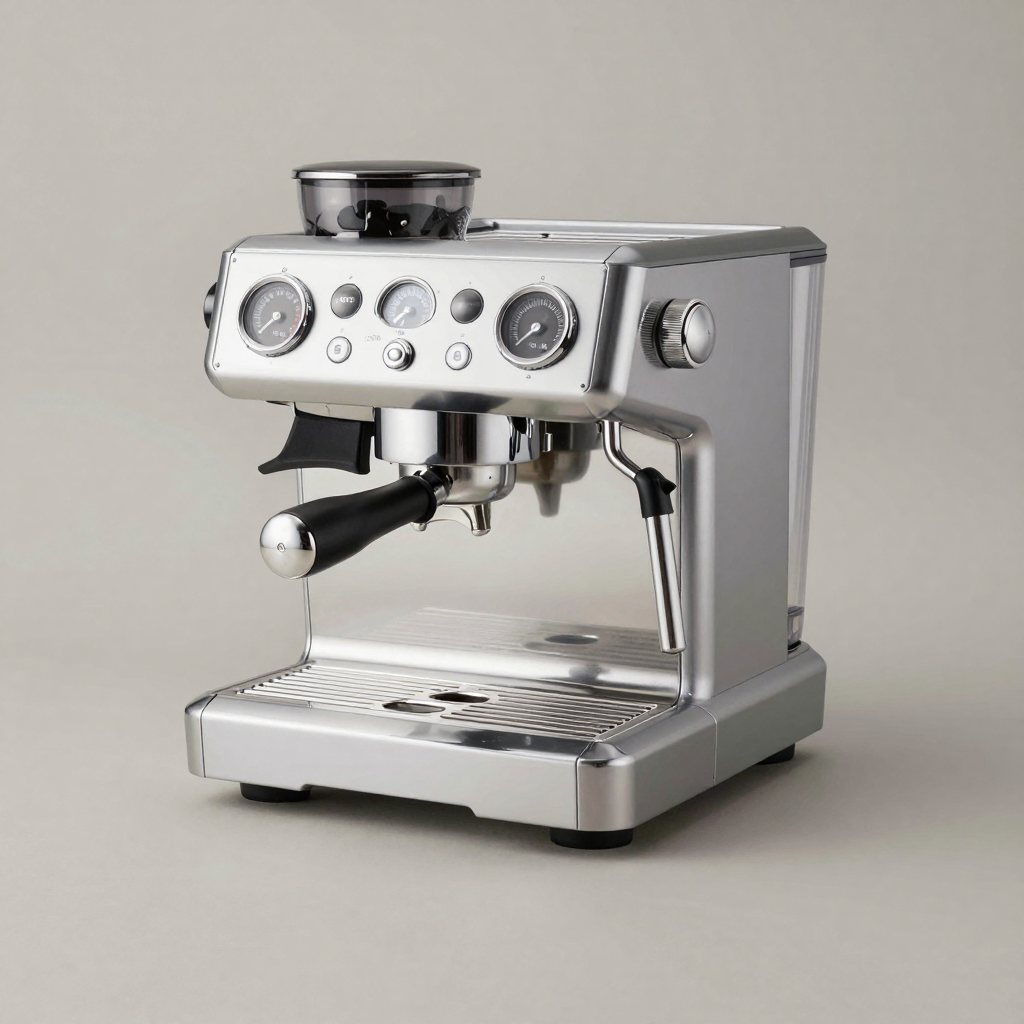
Two boilers mean you can steam milk while the shot runs, and the paddle on the group lets you change water flow during the shot, a technique that used to belong to café machines. It can be plumbed into a water line so you never fill a tank. It takes far longer to heat than a Thermocoil or ThermoJet machine and it is a big, heavy box: this is for someone who makes coffee for a household every morning and wants to keep learning.
What an espresso machine has to do
Espresso is made by pushing hot water through a tightly packed puck of finely ground coffee under pressure, in well under a minute. A good machine has to do three things consistently:
- Hold the water at the right temperature, typically in the low nineties Celsius, without drifting during a shot or between shots.
- Deliver steady pressure, commonly around 9 bar at the puck, without spikes.
- Make enough steam to texture milk for the drinks you make, without the boiler or block running out.
Everything else, from the grinder to the shot timer, helps you repeat a good result. Machines differ less in whether they can make espresso than in how easily and how often they repeat it.
The kinds of home coffee machine
Every machine on this page, and most in the shops, falls into one of a handful of types. Knowing which one you want narrows the choice faster than comparing models.
| Type | What you do | What it does | Suits |
|---|---|---|---|
| Manual espresso, no grinder | Grind, dose, tamp, brew, steam | Heats water and makes pressure | People who enjoy the process and own or will buy a grinder |
| Manual espresso with a grinder | Brew and steam; the grinder doses for you | Grinds into the portafilter, sometimes assists tamping | A first machine, one box on the bench |
| Bean-to-cup (automatic) | Press a button, sometimes steam milk | Grinds, doses, tamps, brews and ejects the grounds | Households that want espresso without the technique |
| Capsule or pod | Insert a pod | Brews a measured shot | Speed and no mess, at a higher cost per cup |
| Stovetop (moka pot) | Fill, heat, pour | Brews strong coffee with steam pressure | Small budgets and camping; not espresso. See how to use a moka pot |
Manual machines make the best coffee for the money once you learn, because the grinder and the barista can be upgraded. Bean-to-cup machines trade a little quality and more maintenance for convenience. Pods cost the most per cup and lock you into a capsule system.
How the water is heated
The heating system decides how quickly a machine is ready, how stable the temperature is, and whether you can steam milk while a shot runs.
| Heating | How it works | What it means at home |
|---|---|---|
| Thermoblock, Thermocoil or ThermoJet | Water is heated as it flows through a heated block or coil | Ready in seconds; brewing and steaming happen one after the other |
| Single boiler | One boiler is heated for brewing, then raised to steam temperature | Wait between the shot and the milk; simple and repairable |
| Heat exchanger | A steam boiler with a tube that heats the brew water passing through it | Brew and steam at the same time; temperature needs some management |
| Dual boiler | Separate brew and steam boilers | Brew and steam at the same time, with stable temperatures; larger and dearer |
A PID controller, a small electronic thermostat, holds the brew temperature more precisely than a simple thermostat, and is worth having at any price.
Basket size, and why it matters later
The portafilter basket size decides which tampers, distributors, baskets and dosing funnels fit. Many Breville machines use 54 mm baskets; commercial-style machines and many enthusiast models use 58 mm; some compact machines use 51 mm. A 58 mm machine has the widest choice of accessories. Our tamper size chart lists common machines.
The rest of the budget
A machine on its own is rarely the whole cost. Allow for:
- A burr grinder, if the machine does not have one. It matters as much as the machine.
- A tamper that fits the basket, if the one supplied is plastic or loose.
- A milk jug, ideally stainless with a spout, sized for your drinks.
- Scales that read to a tenth of a gram, for weighing the dose and the shot.
- Cleaning supplies: a blind basket, cleaning tablets, descaler and a group-head brush.
- Beans: at an 18 g dose, a 250 g bag makes about 13 double shots, so a household making two milk coffees a day goes through roughly one bag a week.
Size, power and the kitchen
Measure before you buy. Check the width and depth against the bench, the height under overhead cupboards with the water tank lid lifted, and the reach to a power point. Most home machines run on an ordinary 10 amp power point, but two high-draw appliances on the same circuit, such as a machine and a kettle, can trip a breaker in some homes. A machine that can be plumbed in, like a dual boiler, also needs a water connection installed by a licensed plumber: see our plumbed in coffee machine guide.
Looking after it
Whatever you buy, it will last longer and make better coffee with a routine:
| How often | Job |
|---|---|
| After every milk drink | Purge and wipe the steam wand |
| Daily | Rinse the portafilter and basket; wipe the group head; empty the drip tray |
| Weekly | Backflush with water, or with a cleaning tablet on machines that allow it |
| Monthly or as directed | Clean the grinder burrs; soak baskets and portafilter parts |
| As directed by the maker | Descale, especially in hard-water areas |
Our espresso machine cleaning guide and the Breville cleaning and descaling guides go through each job.
Milk: wands and milk systems
Most Australians drink their coffee with milk, so the milk side of a machine matters as much as the espresso side.
- A manual steam wand gives you full control and can make café-style microfoam for latte art, but takes practice. Look for a wand that swivels, has enough pressure to spin the milk, and is easy to wipe.
- An automatic steam wand, such as the one on the Bambino Plus, textures milk to a set temperature and foam level in the jug. It is a good compromise for people who want flat whites without learning.
- A built-in milk system on a bean-to-cup machine draws milk from a jug or carafe and froths it into the cup. It is the easiest, but the milk pipes need cleaning every day to stay hygienic.
- A separate milk frother can pair with a machine that has no wand at all: our best milk frother guide compares them.
Which machine for which drinks
| You mostly drink | Look for |
|---|---|
| Espresso and long blacks | Temperature stability and a good grinder; the milk system matters little |
| One or two flat whites or lattes a day | Any manual machine with a capable wand, or an automatic wand if you want it easy |
| Several milk drinks in a row, for guests | Brewing and steaming at once: a heat exchanger or dual boiler |
| Iced and cold coffee | A machine for shots, plus a cold brew coffee maker for batches |
| Whatever is quickest | A bean-to-cup machine with an automatic milk system |
Your first weeks with a manual machine
The first fortnight is mostly learning to dial in, and a few habits make it much faster:
- Weigh everything. Start with the basket's rated dose, such as 18 g in an 18 g basket.
- Aim for a starting ratio. A common starting point is about twice the dose in liquid coffee, so 18 g in, about 36 g out, in roughly 25 to 30 seconds. Treat it as a place to start, then adjust to taste.
- Change one thing at a time, usually the grind. Finer slows the shot; coarser speeds it up.
- Use fresh beans roasted within the last few weeks. Stale beans run fast and taste flat whatever you do.
- Practise milk with water and a drop of detergent before wasting litres of milk; it behaves similarly in the jug.
Common problems, and the usual fix
| What you notice | Likely cause | Try |
|---|---|---|
| Sour, thin shot that runs fast | Grind too coarse, dose too low, or beans stale | Grind finer; check the dose; fresher beans |
| Bitter, harsh shot that drips slowly | Grind too fine or dose too high | Grind coarser or reduce the dose |
| Spurts or pale streaks in the stream | Uneven puck, known as channelling | Distribute the grounds evenly and tamp level |
| Milk is big-bubbled and stiff | Too much air too late | Introduce air early, then sink the tip to spin the milk |
| Milk too hot or scalded | Steamed too long | Stop when the jug is too hot to hold comfortably, or use a thermometer |
| Water leaking from the group | Worn or dirty group gasket | Clean the group; replace the gasket if it has hardened |
Buying second-hand
A used machine can be good value, especially an older single or dual boiler with standard parts. Before you hand over money:
- ask to see it heat up, pull a shot and steam milk;
- check for leaks, scale around the group head and steam wand, and a working pressure gauge if it has one;
- ask when it was last descaled and whether the group gasket has been replaced;
- check that the brand still supplies parts and has a service agent in Australia; and
- remember that consumer guarantees generally apply to goods bought from a business, and are more limited in a private sale.
Where to buy, and what to check
Buy from a retailer that is authorised to sell the brand if you want the maker's warranty honoured without argument, and keep the receipt. Before you buy, check the warranty length, whether it covers the machine at home only or also in an office, and where it would be repaired. A machine with an Australian service network is worth more over its life than a slightly cheaper import with no local parts.
Features, explained
Machine listings are full of terms that are easy to skim past. The ones worth understanding:
| Feature | What it does | Worth paying for? |
|---|---|---|
| PID temperature control | Holds the brew water at a set temperature electronically | Yes, at any price |
| Pre-infusion | Wets the puck at low pressure before full pressure, for a more even shot | Useful, especially for beginners |
| Pressure gauge | Shows brew pressure during the shot | Helpful for learning; not essential |
| Over-pressure valve (OPV) | Limits maximum brew pressure | A good sign on any manual machine |
| E61 group head | A heavy, heated group design used in many enthusiast machines | Stable and repairable; slow to warm up |
| Flow control | Lets you change water flow during the shot | Enthusiast feature; skip for a first machine |
| Programmable shot volumes | Stops the shot automatically at a set volume | Convenient for repeatable mornings |
| Hot water outlet | Dispenses hot water for long blacks and tea | Handy if you drink long blacks |
| Auto-off | Turns the machine off after a set time | Saves power and worry |
| Removable brew unit (bean-to-cup) | Lets you rinse the brew group yourself | Makes hygiene much easier |
Bean-to-cup machines in more detail
An automatic machine looks after the coffee but not its own hygiene. Before buying one, check:
- Whether the brew unit comes out. A removable brew group can be rinsed under the tap; a fixed one relies on cleaning cycles and tablets.
- How the milk system cleans. A wand you wipe is simple; a milk carafe or tube system needs a rinse after every use and a deeper clean regularly.
- The grind adjustment. More steps give more control over strength and taste.
- The descaling program, and whether the maker sells or recommends a particular descaler and water filter.
- The cost and availability of service. Automatic machines have more moving parts, so a local service agent matters.
Pod and capsule machines
Pods are the quickest way to a hot coffee and the cleanest bench. The costs are different: the machine is cheap, the coffee is dear. To compare, divide the price of a box of pods by the number of pods, then compare it with the cost of the coffee in a cup from beans, roughly the price of a 250 g bag divided by about 13 double shots. Check, too, how the capsules can be recycled where you live, because aluminium and plastic pods are not accepted in every kerbside bin.
Questions to ask in the shop
- Does it take standard single-wall baskets, and what size?
- Can I steam milk while a shot runs, or do I have to wait?
- How long does it take to heat up from cold?
- What cleaning does it need daily and weekly, and what do the supplies cost?
- Where is it serviced, and how long is the warranty?
- Are replacement parts, such as gaskets, baskets and water filters, easy to buy?
What each price range gets you
Prices change often, so think in bands rather than exact figures. Using the Australian listings on this page as reference points:
| Budget | What you typically get | The catch |
|---|---|---|
| Under about $500 | Compact thermoblock machines, often with pressurised baskets; pod machines | Limited steam power; some cannot take standard baskets |
| About $500 to $1,000 | Capable manual machines such as the Bambino Plus, and machines with built-in grinders such as the Barista Express Impress; entry bean-to-cup machines | You may still need a grinder; milk takes practice |
| About $1,000 to $2,500 | Single boilers with commercial-size baskets, heat exchangers, and better bean-to-cup machines | Larger and heavier; some need more warm-up time |
| Above about $2,500 | Dual boilers such as the Lelit Bianca, flow control, plumb-in options | Diminishing returns unless you will use the control |
Spend at least as much attention on the grinder as on the machine. A modest machine with a good grinder usually beats an expensive machine with a poor one.
Everyday use: the small things that matter
After the first month, how a machine fits your morning matters more than its specification:
- The water tank. Can you fill it without moving the machine or lifting it out from under a cupboard?
- The drip tray. A small tray fills quickly and spills when carried; an indicator that pops up when it is full helps.
- The portafilter. Commercial-size portafilters are heavy. Try the weight in your hand if anyone in the house has weak wrists.
- Warm-up time. Thermoblock machines are ready in seconds; boiler machines can take many minutes from cold unless you use a timer or smart plug, if the maker allows it.
- Noise. Vibration pumps are louder than rotary pumps, and built-in grinders add noise early in the morning.
- Power use. Boiler machines left on all day use more power than those that heat on demand. An auto-off setting keeps it in check.
The drinks you can make
Any espresso machine with a steam wand makes the whole café menu. Our guides cover the differences: a flat white vs latte, macchiato, magic and cortado, ristretto and lungo, and a long black vs Americano. If you mostly drink black coffee, a machine with excellent temperature control matters more than its steam power; if you mostly drink milk coffee, the opposite.
What to skip
- Machines that only take pressurised baskets. Double-wall baskets make a passable shot from pre-ground coffee, but a machine that cannot take a standard single-wall basket will never make better coffee as your skills and grinder improve.
- Cheap "espresso makers" that brew with steam pressure. They cannot reach the pressure espresso needs and make strong, bitter coffee rather than espresso.
- Buying a machine and keeping pre-ground coffee. Spend part of the budget on a burr grinder instead. See the best grinders for espresso.
- Ignoring your water. If you live in a hard-water area, a filter jug or the machine's own filter is cheaper than a repair.
Your rights when something breaks
For an eligible consumer purchase, Australian Consumer Law guarantees apply separately from a maker's warranty. The ACCC says a major product problem gives you a choice of a refund or replacement; a minor problem is generally repaired free first. A seller may assess the cause, and consumer-caused misuse can affect a remedy, but a warranty's wording does not remove statutory rights. Keep proof of purchase and follow the specific maintenance instructions. See the ACCC source below for the distinction.
Common questions
What is the best brand of coffee machine for home use?
Choose the workflow first. Breville offers assisted portafilter models, De'Longhi, Philips and JURA have bean-to-cup ranges, and makers such as Gaggia and Lelit offer traditional espresso machines. Check the specific milk system, local parts and service rather than assuming one brand wins every comparison.
What is a good coffee machine for home use?
One that suits your drinks, bench and routine. An Express Impress combines grinding and assisted tamping; a Bambino Plus needs a separate grinder but automates milk texturing. A bean-to-cup model reduces grounds handling, with milk automation varying by model.
What is the best coffee machine on the market for home use?
At the top end, dual boiler machines such as the Lelit Bianca let you steam and brew at once and control flow during the shot. They cost several thousand dollars and suit people who make a lot of coffee and want to keep learning.
Is a fully automatic machine worth it?
It can reduce dose preparation and grounds handling, but it still needs cleaning and descaling. Check whether the model handles milk automatically or uses a manual wand.
How much should I spend on a home coffee machine?
Most people get excellent coffee from a machine between about $500 and $1,000 plus a decent grinder. Above that, you are paying for speed, temperature stability and control rather than a better cup at your skill level.
Is a coffee machine with a built-in grinder worth it?
It saves bench space and the cost of a second appliance. The trade-off is that the grinder cannot be upgraded on its own, and if one part fails the whole unit goes in for repair.
What is the difference between a single boiler and a dual boiler?
A single boiler heats for brewing, then has to heat further for steam, so you wait between the shot and the milk. A dual boiler has separate boilers, so you can brew and steam at once.
Do pod machines make real espresso?
They make a short, pressurised coffee, but you cannot adjust the grind, dose or freshness, and the cost per cup is higher than buying beans.
How long do home coffee machines last?
With regular cleaning and descaling, many machines run for years. Machines with standard, replaceable parts, such as single and dual boiler models, are easier to keep repairing.
What should I look for in a first espresso machine?
A machine that takes standard single-wall baskets, has a PID or stable temperature, a usable steam wand, and parts and service available in Australia.
Is it cheaper to make coffee at home than buy it?
Usually, once the machine is paid off. At an 18 g dose, a 250 g bag makes about 13 double shots, so the coffee in each cup costs a fraction of a café price; milk, cleaning and the machine itself add to it.
Do I need a grinder if my machine does not have one?
Yes, for good espresso. Pre-ground coffee goes stale quickly and is rarely ground fine enough for an unpressurised basket.
What is a pressurised basket?
A double-wall basket that creates pressure itself, so pre-ground coffee can still make a crema-like shot. It is forgiving but limits how good the coffee can get; switch to single-wall baskets once you have a grinder.
Can I use a home coffee machine in an office?
Check the warranty first: some makers cover domestic use only. Busy offices are often better served by a bean-to-cup or a commercial machine.
What does PID mean on a coffee machine?
A PID controller is an electronic thermostat that holds the brew water at a steady, set temperature. It helps every shot taste the same and is worth having at any price.
What is an E61 group head?
A heavy, heated group design used in many enthusiast espresso machines since the 1960s. It is stable and easy to repair, but takes longer to heat up than a thermoblock machine.
Can I make a long black with an espresso machine?
Yes. Pour hot water into the cup first, then pull a double shot over it. Machines with a hot water outlet make it easier; see our long black vs Americano guide.
Which is easier to clean, a manual machine or a bean-to-cup?
A manual machine's parts are open and easy to reach. Bean-to-cup machines run cleaning cycles, but their milk systems and brew units need regular attention to stay hygienic.
What pressure should a home espresso machine have?
Brew pressure of around 9 bar at the puck is a common target. Advertised 15 or 20 bar figures describe the pump's maximum, not the pressure used for brewing.
Is a heat exchanger or dual boiler better?
Both let you brew and steam at once. A dual boiler holds the brew temperature more precisely; a heat exchanger is usually simpler and cheaper but needs a little temperature management.
What coffee machine do cafés use at home?
Many baristas use machines with commercial-size 58 mm baskets and strong steam, such as heat exchangers and dual boilers, because the workflow matches what they use at work.
How long does an espresso machine take to heat up?
Thermoblock and similar machines are ready in seconds. Single boilers take several minutes, and machines with heavy E61 groups can take considerably longer from cold.
Is a louder coffee machine a worse one?
Not necessarily. Vibration pumps are louder than rotary pumps but work well; noise mostly matters if you make coffee while others sleep.
Can I leave my espresso machine on all day?
You can, but it uses power the whole time. Use auto-off, or switch it on when you need it, especially with boiler machines.
Do I need filtered water for my coffee machine?
It depends on your water. In hard-water areas, a filter or filtered water reduces scale; follow the maker's hardness test and filter instructions, because some machines should not use fully demineralised water.
How often should I descale my coffee machine?
As often as the maker recommends for your water hardness. Many machines have a descale alert; hard water means more frequent descaling.
What size tamper do I need?
One that matches the inside diameter of your machine's basket, such as 54 mm for many Breville machines or 58 mm for commercial-style machines. Our tamper size chart lists common models.
Is a coffee machine a good gift?
It can be, but espresso machines suit people who want to learn. For someone who just wants coffee quickly, a bean-to-cup or pod machine is usually the safer choice.
Sources
- Breville Australia, the Barista Express Impress (BES876) product page, RRP and specifications
- Breville Australia, the Bambino Plus BES500 (Australian price and current published features)
- Coffee Parts, Gaggia Classic Evo Pro listing (Australian price)
- De'Longhi Australia, Magnifica Evo ECAM290.31.SB (manual wand and dated listed price)
- Di Pacci, Lelit Bianca V3 (PL162T) listing (Australian price)
- WaterScore, water hardness by Australian capital city, compiled from utility reports
- ACCC, Repair, replace, refund, cancel (major/minor product problems and consumer-caused damage)