Step 1: get the size right
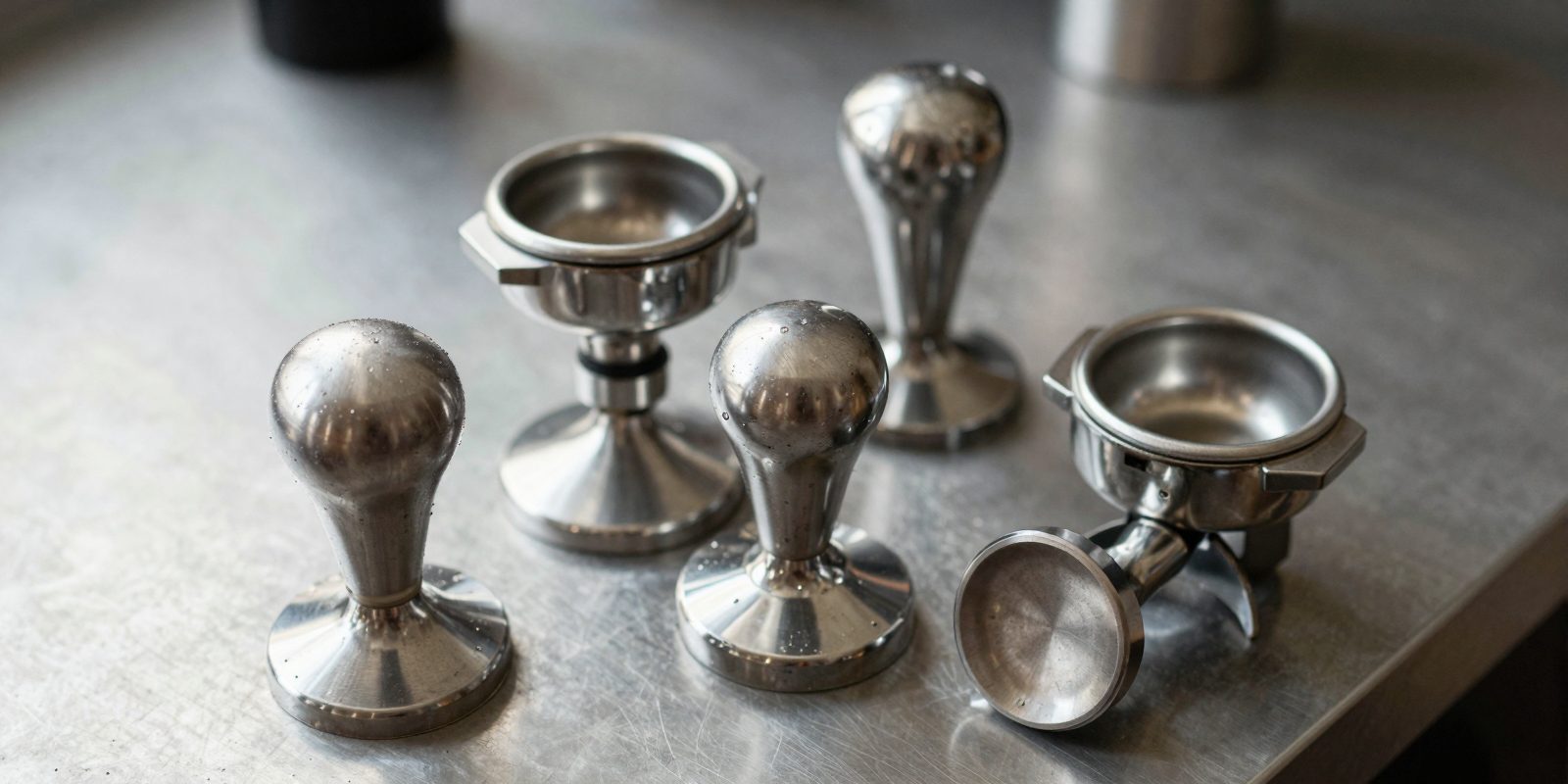
A tamper should fill the basket almost edge to edge, with a hair of clearance so it does not jam. If it is too small, coffee is left untamped around the rim and water rushes through the gap (channelling), which makes sour, thin shots. The size is set by your machine's basket, not by the tamper:
| Basket size | Common machines | Tamper to look for |
|---|---|---|
| 51 mm | De'Longhi Dedica, La Specialista, many budget machines | 50.5–51 mm |
| 54 mm | Breville Barista Express, Pro, Touch, Bambino | 53–53.5 mm |
| 58 mm | Commercial machines, E61 machines, Gaggia Classic, Rancilio Silvia, Breville Dual Boiler | 58–58.5 mm |
The tamper size chart lists the models covered by this guide. If you have upgraded to "precision" baskets, measure the inside of the basket at the top with a ruler or calipers: precision baskets are often slightly wider and take the larger tamper sizes (58.35 to 58.5 mm on a 58 mm group).
Step 2: choose the base
- Flat. The standard. Easy to keep level with practice.
- Convex (slightly curved). Leaves a gently domed puck. Some baristas like it; it makes no difference most people can taste.
- Calibrated or spring-loaded. A spring clicks when you reach a set pressure. Useful while learning, because it removes the guesswork about how hard to press.
- Self-levelling. A sleeve rests on the basket rim so the base cannot go in crooked. The single most useful upgrade for beginners, because an uneven tamp causes more bad shots than too little pressure.
Step 3: weight and handle
A heavier stainless base lets gravity do some of the work; aluminium is lighter and cheaper. Handles are about comfort: choose one that fits your hand, because you will use it every day.
How hard should you tamp?
Firmly and evenly, until the coffee stops compressing. The often-quoted "30 pounds" (about 14 kg) is a rule of thumb, not a requirement. Once the coffee is fully compressed, extra pressure changes very little. Being level and consistent every time matters much more.
Do you need an automatic tamper?
For a busy café, often yes: an automatic tamper presses every shot level at the same pressure and saves baristas thousands of repetitive presses a day. At home, a self-levelling hand tamper gets you most of the way for a fraction of the price. Our automatic tamper guide covers how they work and how to set one up.
Distribution before you tamp
Tamping compresses the coffee, but it cannot fix grounds that are piled unevenly in the basket. If one side is denser than the other, water finds the easier path, a problem called channelling, and the shot tastes sour and bitter at once. Good distribution comes first:
- Grind into the basket evenly, moving the portafilter or dosing cup so the grounds land across the whole surface.
- Break up clumps with a fine needle tool, stirring the grounds in small circles, often called WDT.
- Tap the portafilter gently on a tamping mat, or use a distribution tool, to level the surface.
- Then tamp once, firmly and level.
Many home baristas find that a needle tool improves their shots more than a new tamper does.
Distribution tools
Distribution tools, sometimes called levellers, sit on the basket and spread the top layer of coffee with angled fins as you turn them. They make the surface flat and consistent before tamping, and some double as a tamper on the other side. They are no substitute for breaking up clumps underneath, but they help consistency. Make sure the tool matches your basket size, as with tampers.
How to tamp, step by step
- Rest the portafilter on a tamping mat or the edge of a bench, spouts clear, so it is level and stable.
- Hold the tamper like a door handle, with your wrist straight above it and your elbow above your wrist.
- Press straight down until the coffee stops compressing, keeping the tamper level.
- Do not twist hard or tap the side of the portafilter after tamping; tapping can crack the puck and cause channelling.
- Wipe the rim of the basket clean before locking it into the group, so it seals well.
Signs your tamping needs work
| What you see | Likely cause | Fix |
|---|---|---|
| Shot runs fast and sour | Uneven or loose coffee, or grind too coarse | Distribute, tamp level, then check the grind |
| Shot runs from one side of the basket | Uneven tamp or distribution | Use a needle tool; check the tamper is level |
| Wet, sloppy puck | Dose too low or too much space above the coffee | Increase the dose slightly |
| Pinholes in the puck | Channelling through clumps | Break up clumps before tamping |
| Puck stuck to the shower screen | Dose too high | Reduce the dose |
Tamping mats and stands
A rubber tamping mat protects the bench and the portafilter's spouts and gives a steady, non-slip surface. Corner mats that hang over the edge of the bench let the spouts sit below the surface so the basket rests flat. A tamping stand holds the portafilter level for you. Neither is essential, but both help consistency and save wear on the bench.
Care of your tamper
Wipe the base after each use so coffee oils do not build up, and dry it. Stainless bases can go in warm soapy water; timber handles should not soak. Store the tamper base-down on a mat or in a stand so the edge does not get nicked, because a dented edge can catch on the basket.
A tamper for each machine type
- Pressurised baskets, common on budget machines, need very little tamping; a light press with the supplied tamper is usually enough.
- Single-wall baskets on better home machines need a properly fitted tamper and good distribution.
- Precision baskets are slightly wider, so measure them and buy the matching size.
- Automatic machines tamp for you inside the brew unit; you do not need a tamper. Our best automatic coffee machine guide explains how they work.
Upgrading from the plastic tamper
Many machines come with a light plastic tamper that is slightly too small for the basket. Swapping it for a properly sized metal tamper is one of the cheapest upgrades in home espresso. The extra weight helps you press evenly, and the right diameter compresses the coffee to the edge of the basket, reducing channelling around the rim. If you use a pressurised basket, the difference is smaller; with a single-wall basket, it is noticeable.
Measuring your basket
If you are not sure of the size, measure the inside diameter of the basket at the top edge with a ruler or calipers, in millimetres. Choose a tamper a fraction smaller than that measurement, so it slides in without catching. Check the basket model too: many machines take several baskets of the same diameter but different depths.
Tamping for different drinks
You do not need to tamp differently for a ristretto, espresso or lungo; the grind, dose and yield change the shot, not the tamp. Keep the tamp consistent, firm and level for every shot so that it never becomes the variable. That consistency is what lets you adjust the grind and taste the difference. Our ristretto vs lungo guide covers the shot styles.
Quick checklist before every shot
- Dry, clean basket.
- Correct dose, weighed.
- Clumps broken up.
- Grounds level.
- One firm, level tamp.
- Clean rim, then lock in and brew.
Materials and finishes
Tamper bases are usually stainless steel, aluminium or chrome-plated brass. Stainless is heavy, durable and easy to clean; aluminium is light and cheap; plated brass looks good but the plating can wear. Handles come in timber, metal, resin and plastic. None of these affects the coffee as much as size, levelness and consistency. Choose a base that fits your basket and a handle that feels comfortable, and you have chosen well.
Buying a tamper in Australia
Specialist coffee retailers and online coffee stores sell tampers in all the common sizes, often listing which machines each fits. Check the exact diameter and whether the base is flat or convex before buying, and keep the receipt in case the fit is wrong.
Is a more expensive tamper worth it?
A heavier, precisely sized stainless tamper is worth the upgrade from a loose plastic one, and a self-levelling or calibrated tamper is worth it for beginners who struggle to tamp evenly. Beyond that, you are paying mostly for looks and feel. If your shots are inconsistent, a scale, a needle tool and a better grinder usually help more than a premium tamper.
Our short answer
Buy a tamper that matches your basket's diameter almost exactly, with a flat base and a comfortable handle. If you are learning, a self-levelling or calibrated tamper removes the two most common mistakes, a crooked tamp and inconsistent pressure. Break up clumps with a needle tool before tamping, tamp once firmly and level, and keep everything else consistent so you can dial in the grind with confidence.
A tamper for travel and second machines
If you take a small espresso machine or a manual lever brewer travelling, a compact tamper that matches its basket is worth packing; many travel brewers come with one that is too small or too light. In an office with a second machine, a labelled tamper that stays with that machine saves arguments about who borrowed it.
Common questions about tamping
Should I tamp twice? One firm, level tamp is enough; a second tamp rarely helps.
Does tamp pressure change the shot time? A little at first, but once the coffee is fully compressed, the grind controls the shot time far more than pressure does.
Can I use a measuring spoon to tamp? It works in a pinch on a pressurised basket, but a properly sized tamper is far more consistent.
Tampers and puck screens
A puck screen is a thin metal disc placed on top of the tamped coffee. It spreads water from the shower screen more evenly and keeps the group head cleaner. It sits on top of a normal tamp, so you still need a well-fitted tamper underneath it.
Keep the tamper next to the grinder, base down on a mat, so it is always to hand and never knocked off the bench.
A well-fitted tamper is one of the cheapest ways to make home espresso more consistent, and it lasts for years.
One last tip
If your shots suddenly change, check the basket and tamper fit before anything else; a new basket or a dropped, dented tamper is a common, overlooked cause.
Common questions
Is a coffee tamper worth it?
A tamper is part of preparing espresso, but a replacement is useful only if it improves the fit or makes a level tamp easier. Check the supplied tamper against your basket before buying another one.
What can I use instead of a coffee tamper?
A flat-bottomed utensil that fits the basket can compress grounds, but getting an even tamp is difficult. Use the machine's supplied tamper or a correctly sized replacement; do not press glass jars into a basket.
What is considered the best coffee tamper?
The best tamper is the one that fits your basket exactly and keeps you level: for most people, a self-levelling or calibrated tamper in the correct size.
What's the point of a coffee tamper?
Tamping compresses ground coffee into an even, firm puck so the water flows through all of it at the same rate instead of finding gaps.
Can you over tamp your coffee?
Not in a way that matters much. Once the coffee is compressed, extra force changes little. Uneven tamping and wrong grind size cause far more problems.